


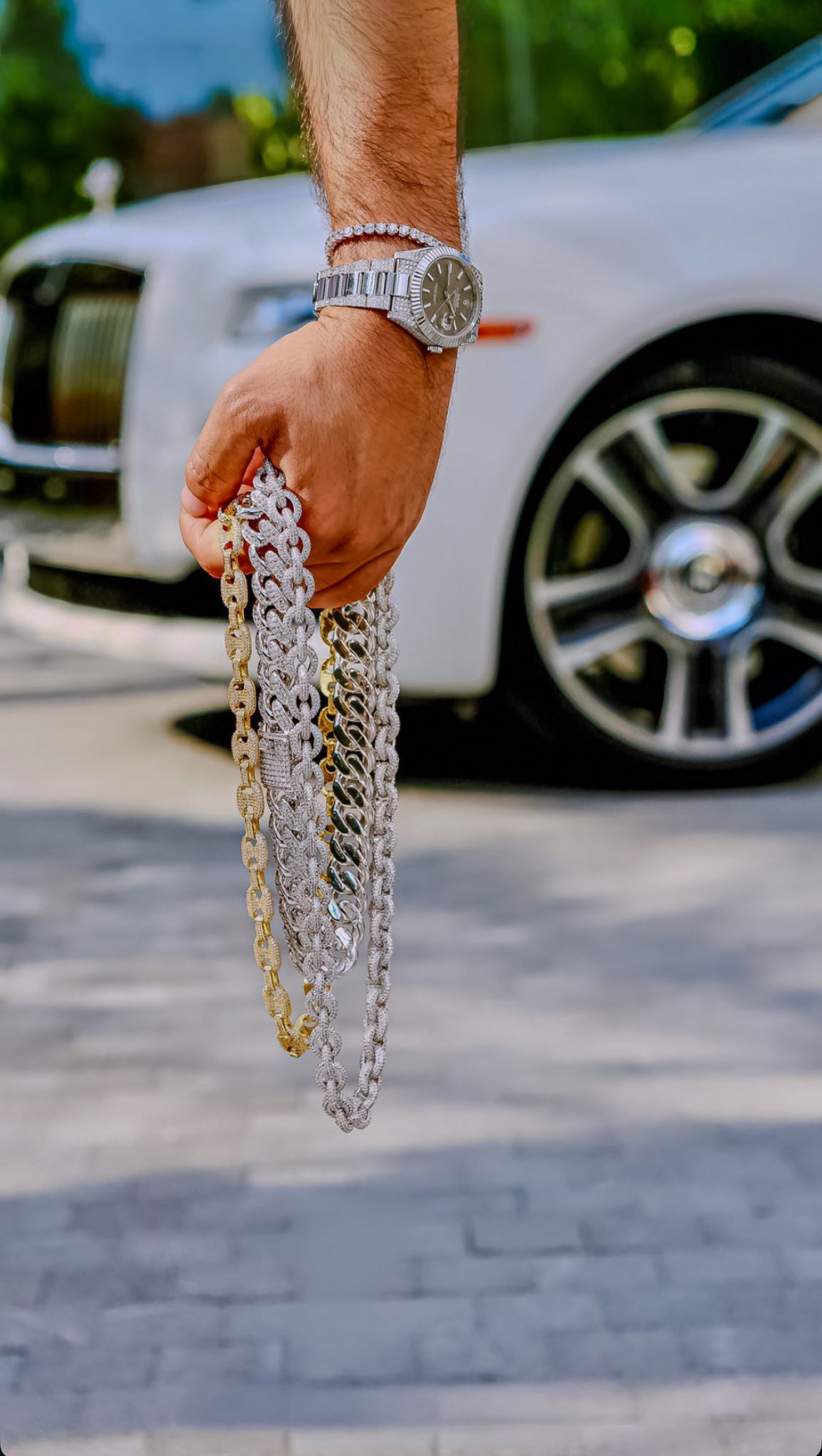

The gold-tone choice is not just aesthetic. It affects how the piece reads against your skin, how it pairs with the rest of your wardrobe, and how it photographs. Here is how to pick the right tone for you.
Yellow gold: the heritage default
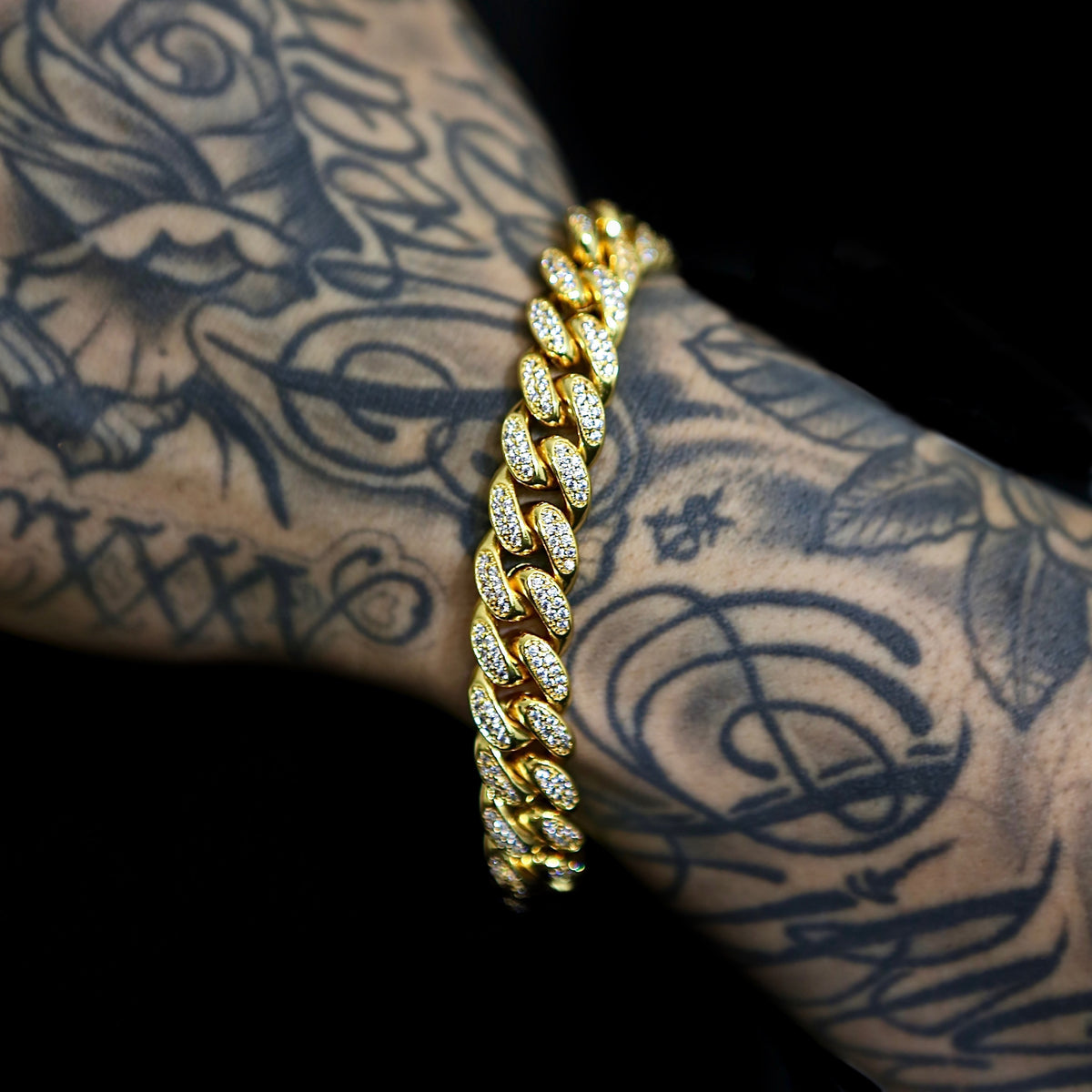
Yellow gold is the original. Every culture that has ever made jewelry made it in yellow gold first. Hip-hop's love affair with yellow gold dates back to the 1970s and never broke.
The color reads as warm, traditional, and assertive. It pairs especially well with:
- Darker skin tones (the warm tone complements melanin-rich skin beautifully)
- Black, navy, olive, and earth-tone fabrics
- Streetwear with classic hip-hop styling
- Vintage or 1990s-inspired outfits
Yellow gold also has the highest resale value of the three tones because it is the most universally recognized. If you ever want to sell or trade, yellow moves first.
White gold: the modern contender
White gold is yellow gold alloyed with palladium, silver, or nickel to give it a cool tone, then often plated with rhodium for the bright silver-white finish.
The color reads as cool, contemporary, and refined. It pairs especially well with:
- Lighter or cooler skin tones
- Black, white, gray, and blue fabrics
- Modern streetwear, tech-wear, dressy fits
- Anyone who wears silver watches and wants matching jewelry
White gold also makes the icing pop harder. Diamonds against a cool white background read as more diamond, less metal. If you bought iced-out specifically for the stones to dominate, white gold is the right call.
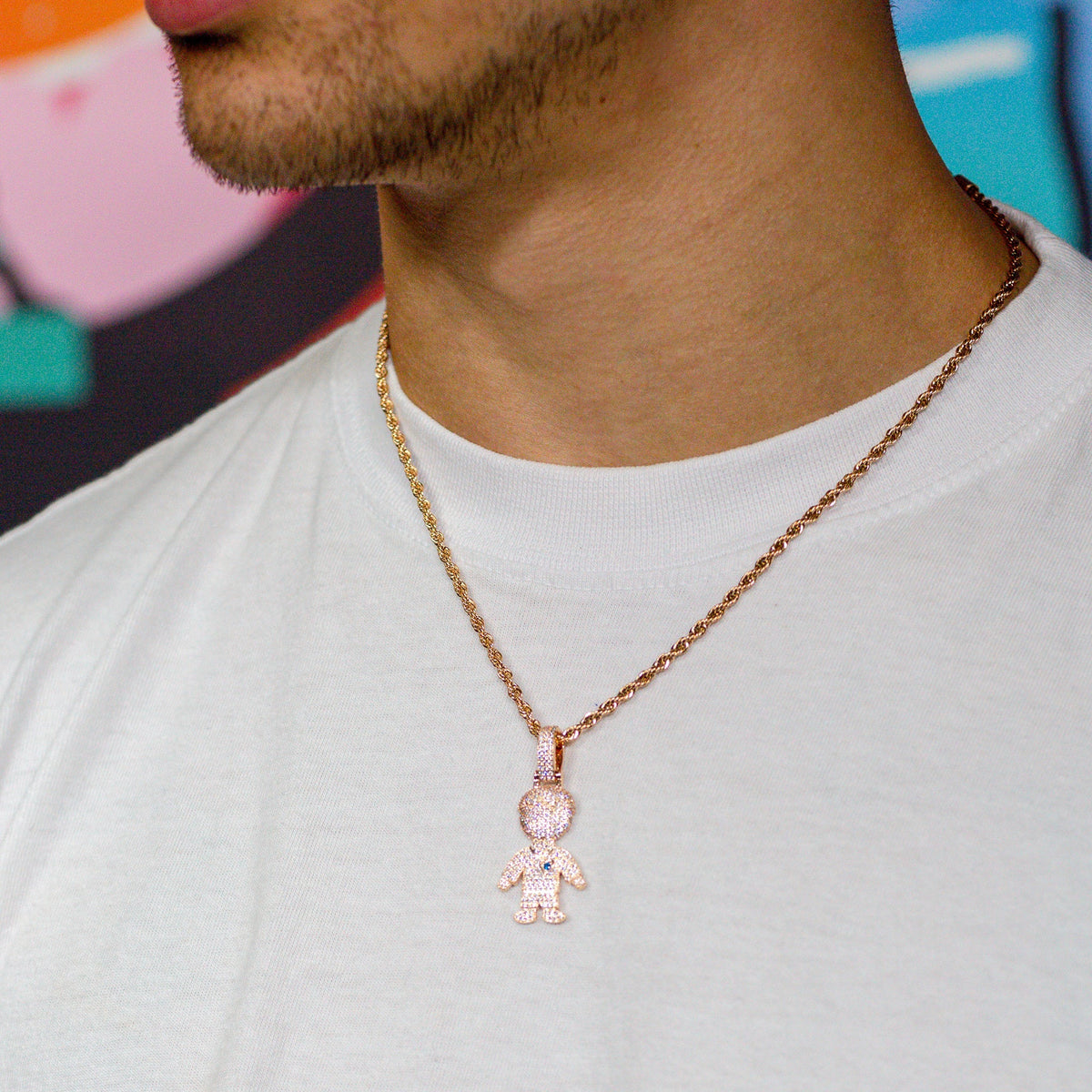
Rose gold: the distinctive move
Rose gold is yellow gold alloyed with copper. The copper gives it a pink-to-warm-bronze hue depending on the ratio.
The color reads as distinctive, designer-leaning, and warmer than yellow. It pairs especially well with:
- Olive and warm-toned skin
- Cream, blush, navy, and burgundy fabrics
- Women's jewelry and femme styling
- Anyone who wants their jewelry to be unmistakably theirs (rose is less common, more memorable)
The trade-off: rose gold is the least universal. Some people love it, some find it too feminine. If you are buying for someone else, rose gold is a higher-risk pick than yellow or white.
How to decide
Ask yourself three questions:
- What other jewelry do you already own? Match the existing tone unless you are intentionally building a mixed-metal stack.
- What color watch do you wear? Your jewelry should read in the same family.
- What is your skin's undertone? Warm undertones (yellow, peach, golden) suit yellow and rose gold. Cool undertones (pink, red, blue) suit white gold.
If you are starting from zero with no existing jewelry, the safest first pick is yellow gold. It works with everything and never feels dated.
Pro tip: matching gold tones across your full jewelry stack matters more than picking the "right" tone. A yellow gold cuban paired with a white gold watch reads as scattered. A yellow cuban with yellow watch reads as intentional.
Mixed metals: when it works
There is one exception to the matching rule. A white gold tennis chain layered with a yellow gold cuban link reads as deliberate because tennis chains and cuban links are visually different categories. Your eye registers them as two pieces, not one mixed-tone collection.
If you want to pull off mixed metals, do it across categories (tennis plus cuban), not within (two yellow cubans plus one white cuban looks confused).
Bottom line
Yellow for classic and resale, white for modern and ice-forward, rose for distinctive. Match the tone of your existing jewelry, your watch, and your skin's undertone.
See yellow gold, white gold, and rose gold collections for SKRT pieces in each tone.

Share:
How to Spot a Fake Iced-Out Chain in 30 Seconds
Can You Shower in a Cuban Chain? The Honest Answer