

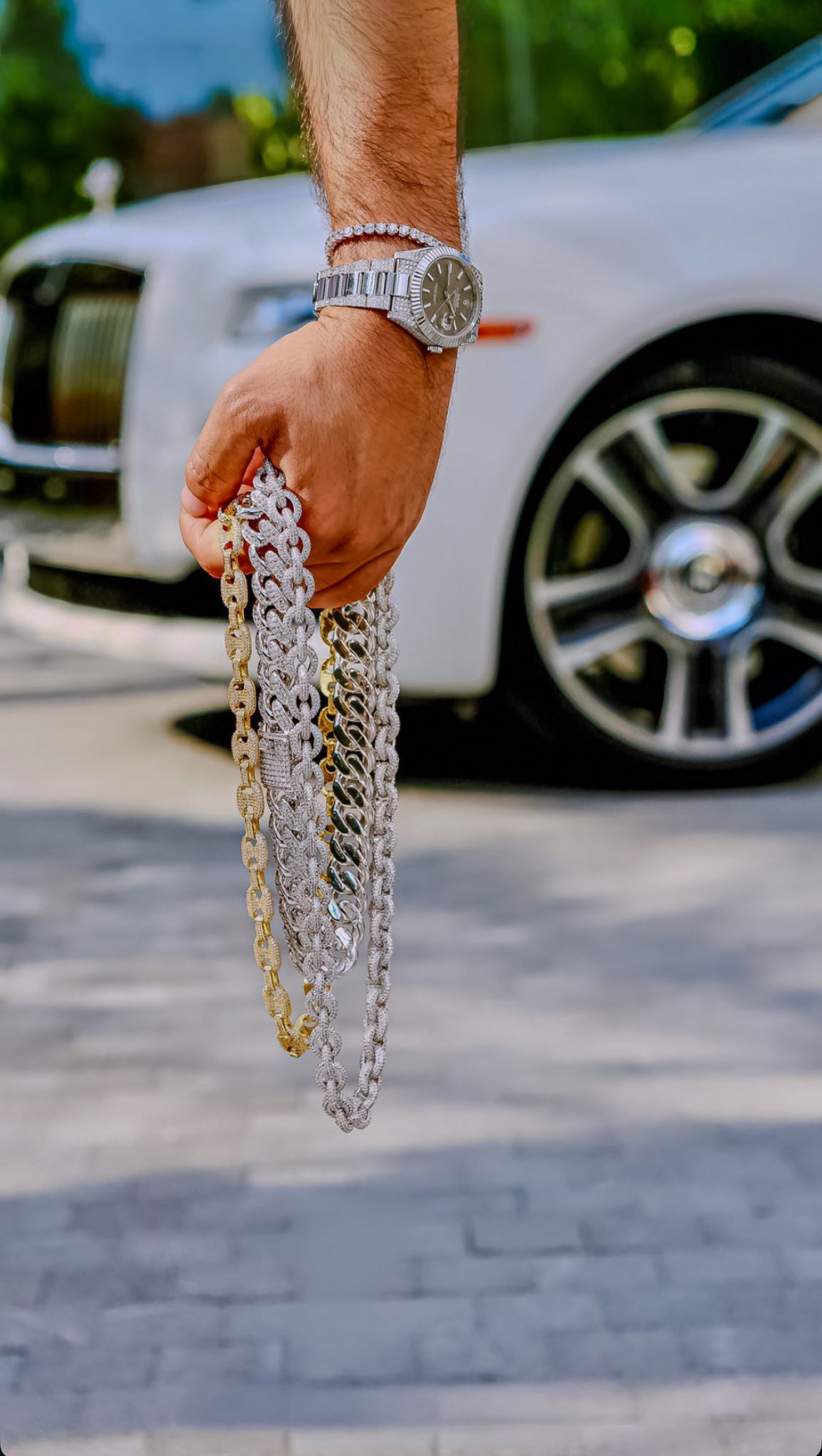
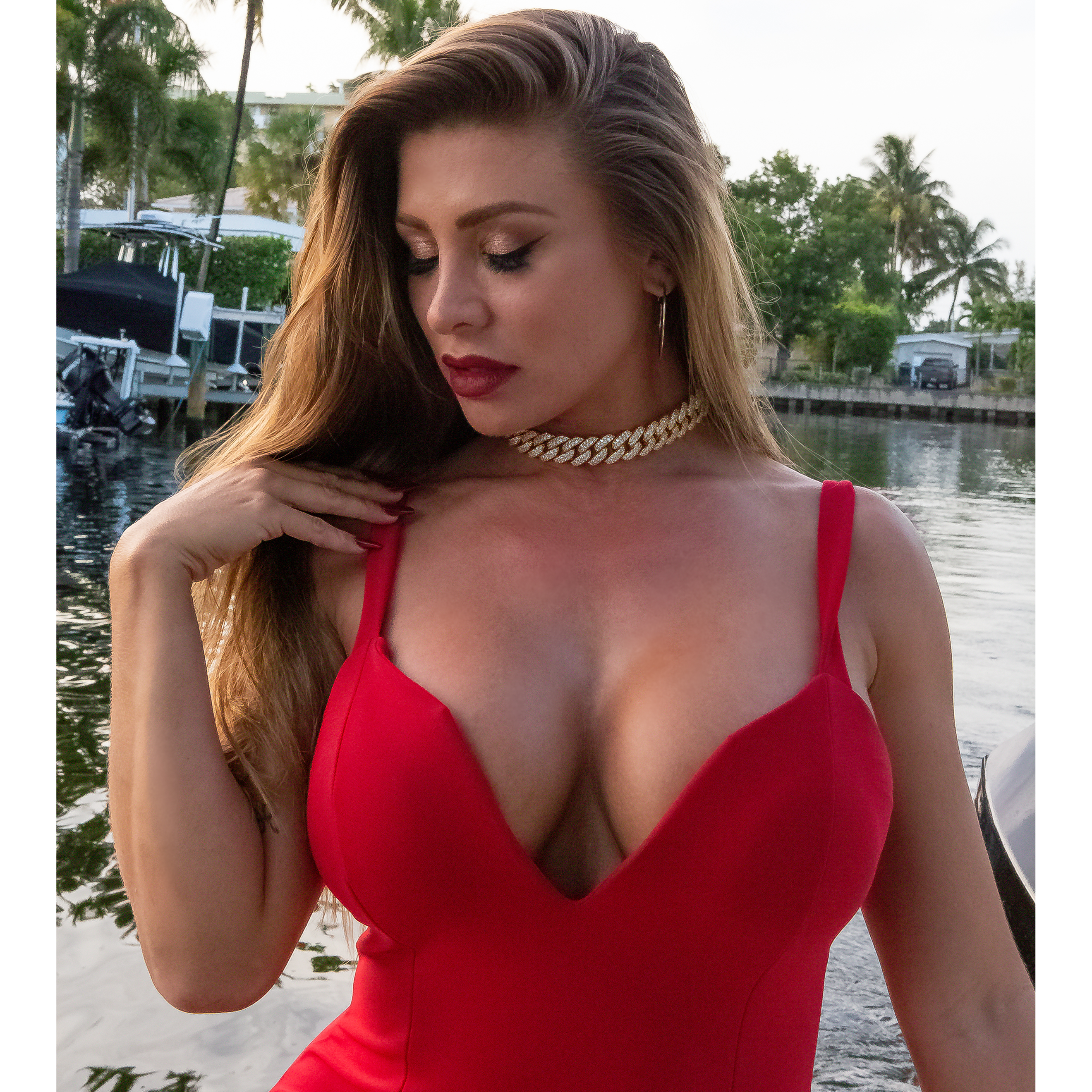
18K gold is the karat that takes hip-hop jewelry from "good" to "premium". It costs more, looks richer, and wears differently. Here is what it actually is and when paying for it makes sense.
What 18K means
Gold is measured in karats out of 24. 18K gold is 18 parts gold to 6 parts alloy metals, which equals 75 percent pure gold by weight (18/24 = 0.75).
Compare to other common karats:
- 24K: 100 percent gold (too soft for jewelry)
- 18K: 75 percent gold
- 14K: 58.3 percent gold
- 10K: 41.7 percent gold
Higher karat equals more pure gold, deeper color, and softer construction. Lower karat equals more alloy, durability, and color compromise.
What 18K looks like
The visual difference between 14K and 18K is real but subtle. Side by side:
- 18K yellow gold: deeper, richer warmth. The gold tone is more saturated.
- 14K yellow gold: lighter, slightly cooler. Reads as gold but pales next to 18K.
For white gold, the difference is less visible because both 14K and 18K white gold are typically rhodium-plated to achieve the bright silver finish.
For rose gold, 18K reads pinker than 14K because the higher gold content means less copper alloy.
When 18K is worth it
Three categories where 18K pays off:
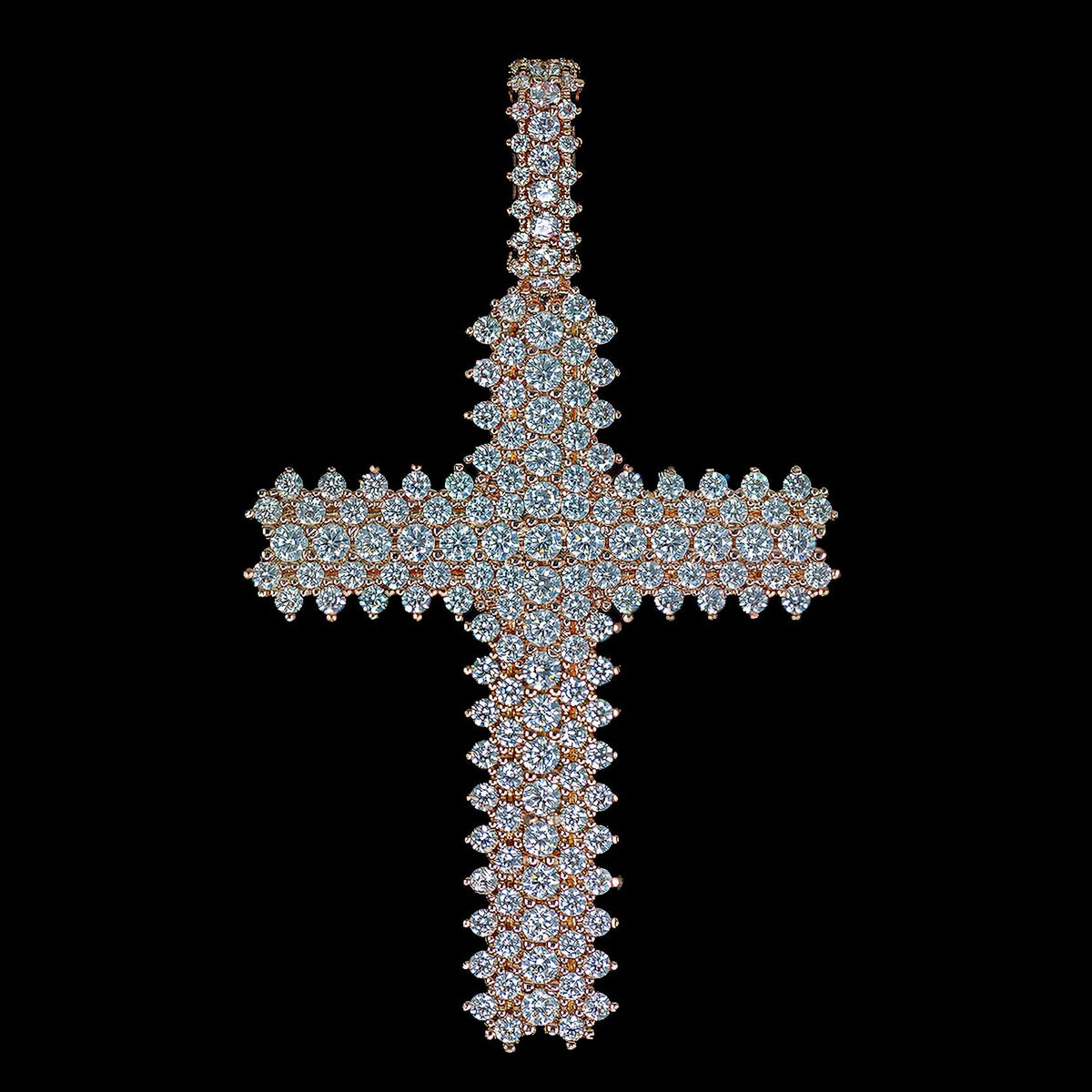
- Pendants you'll keep forever. Pendants don't take physical impact (they hang from a chain, not on a finger). The softer 18K alloy isn't a durability problem here. The richer color is the visible benefit.
- Statement pieces for occasions. A piece that gets photographed in good light shows the 18K depth more clearly than 14K. If you wear something to events specifically, 18K is the choice.
- Gift jewelry where the recipient values quality. 18K reads as "premium" in a way 14K doesn't, even if the casual viewer can't articulate why.
For these pieces, the 30 to 40 percent price increase from 14K to 18K is justified.
When 14K is the smarter pick
Three categories where 14K is smarter:
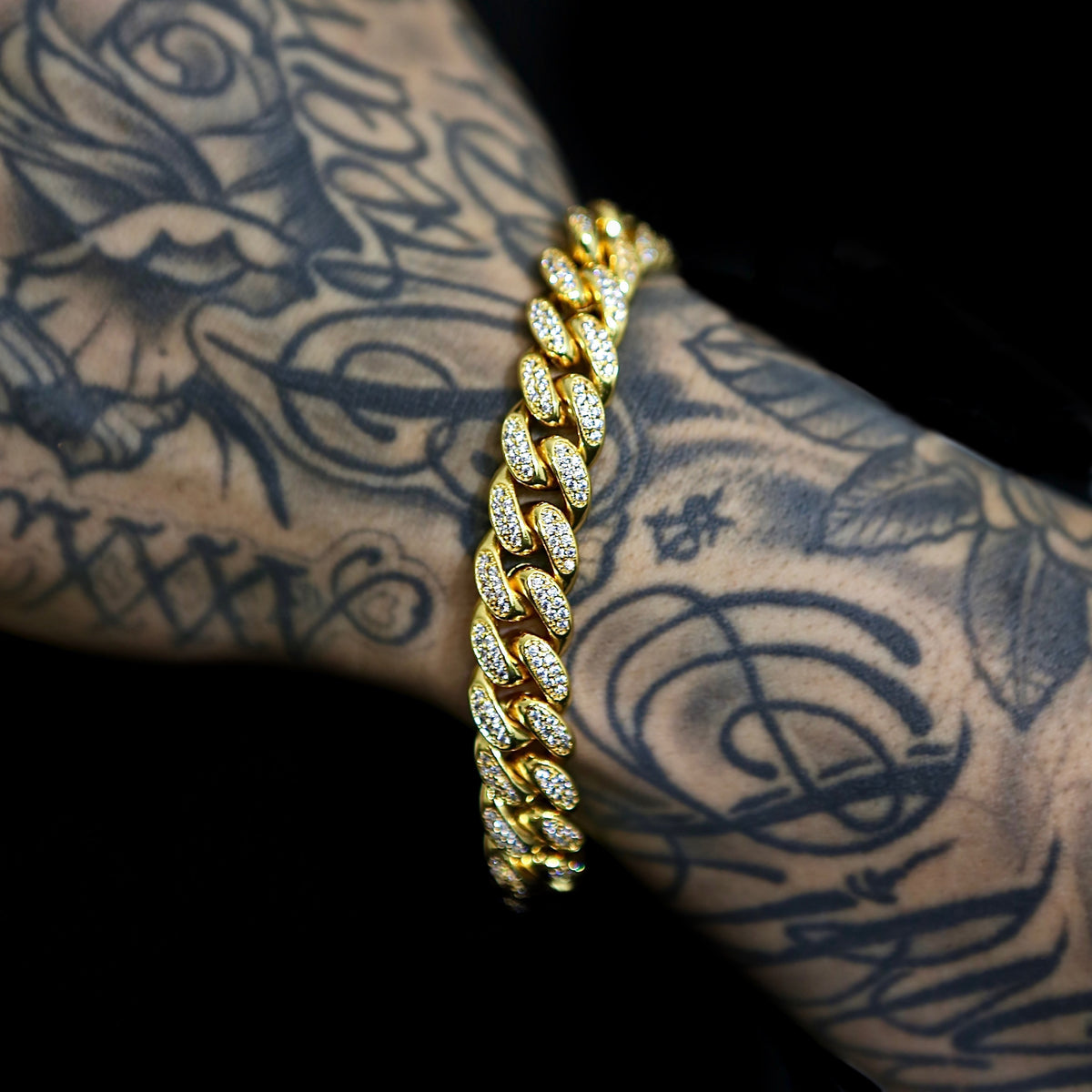
- Daily-wear chains and bracelets. The harder 14K alloy survives daily friction better. Cuban links, tennis chains, anything you'll wear 7 days a week.
- Pieces with prong-set stones. 14K prongs hold their shape under repeated impact better than 18K prongs. Stones stay set longer.
- Pieces with clasps. The 14K alloy springs back into shape after repeated clasping/unclasping. 18K clasps wear out faster.
For these pieces, the durability of 14K outweighs the color upgrade of 18K.
What about 18K plating?
SKRT and most hip-hop jewelry brands use 18K gold plating over a brass or stainless steel core. The plating thickness is what matters, not the karat alone.
Why 18K plating instead of 14K plating:
- Color: 18K plating gives the deep, saturated gold tone customers want
- Durability: 18K plating is roughly equivalent to 14K plating for everyday wear (the base metal underneath does the structural work)
- Value perception: "18K gold plated" reads premium in a way "14K gold plated" doesn't
The plating is gold all the way through (75 percent pure for 18K plating vs 58.3 percent for 14K plating). The difference in plating durability between 14K and 18K is marginal because the base metal is doing the heavy lifting.
Solid 18K vs solid 14K vs 18K plated
A pricing comparison for the same 12mm cuban link, 22 inches:
- Solid 18K gold: 5,500 to 7,000 dollars (depending on iced or plain)
- Solid 14K gold: 3,500 to 4,500 dollars
- 18K plated brass: 350 to 700 dollars (SKRT's range)
The plated piece is one-tenth to one-fifteenth the price. For most people, the look is reachable through plating in a way that solid never is.
How to tell what you have
Real solid gold pieces have karat stamps:
- 18K, 18k, or 750 (European numerical equivalent for 75% gold)
- 14K, 14k, or 585 (European numerical equivalent for 58.3% gold)
The stamp is usually on the clasp or inside a chain link. No stamp on a piece sold as "solid gold" is a red flag.
Plated pieces don't have karat stamps because the karat refers only to the plating layer, not the underlying piece.
Pro tip: if you're buying solid gold, request the karat stamp location and verify it before paying. Some sellers stamp lower-karat pieces with higher-karat stamps to inflate price. A jeweler can verify the stamp is consistent with the metal underneath using density testing.
Bottom line
18K for pendants, statement pieces, and gift jewelry. 14K for daily wear, prong-set pieces, and pieces with clasps. SKRT uses 18K plating across the catalog for the right balance of color, durability, and reachability.
See SKRT's collections for piece-specific construction details.
SKRT picks fitting this guide: the 12mm Cuban Link Chain in 18K Yellow Gold, the 12mm Cuban Link Chain in 18K White Gold, and the 12mm Cuban Link Chain in 18K Rose Gold.
Share:
How Often Should You Re-Plate a Gold Chain?
The Iced-Out Pendant Story: From Slick Rick to Migos