

The pendant has done more identity work in hip-hop than any other piece of jewelry. Forty years of evolution, four distinct eras, and the result is an aesthetic that defines streetwear culture worldwide. Here is the full story.
Era 1: Oversized gold (1985-1995)
The first wave of hip-hop pendants was about size and gold. The 1980s and early 1990s defined the look:
- Oversized gold name plates
- Africa medallions (Public Enemy era)
- Mercedes pendants and Cadillac emblems
- Initial pendants with diamond-set first letters
The construction was usually solid 14K gold with hand-hammered details. Stones were minimal, mostly used as accent on initial pendants. The look was about the gold itself: as much of it as possible, in shapes that announced ownership and identity.
Slick Rick's eyepatch and chain combinations from 1985-1990 are the visual archive of this era. So is LL Cool J's solid gold dookie chain era.
Era 2: Diamond explosion (1995-2005)
The mid-1990s brought diamonds into hip-hop pendants seriously. The shift was driven by three things:
- Cash Money's "Bling Bling" era (1999 onward)
- Roc-A-Fella's Jacob the Jeweler partnership (Jay-Z's diamond pieces)
- Pharrell's N.E.R.D pendant and the Neptunes era
Pendants got iced. Stone density went up. The size stayed maximal. Specific archetypes emerged:
- The full diamond Roc-A-Fella pendant (Jay-Z, Damon Dash)
- The diamond Cash Money "C" pendant
- The Pharrell N.E.R.D piece (oversized, fully iced)
- Custom name plates with hundreds of diamonds
Jacob the Jeweler in NYC was the central figure. His pieces ran 50,000 to 500,000 dollars and were almost exclusively for established artists.
Era 3: Religious and symbolic (2005-2015)
The mid-2000s through early-2010s saw pendants get more personal. Less about labels and brands, more about beliefs and stories:
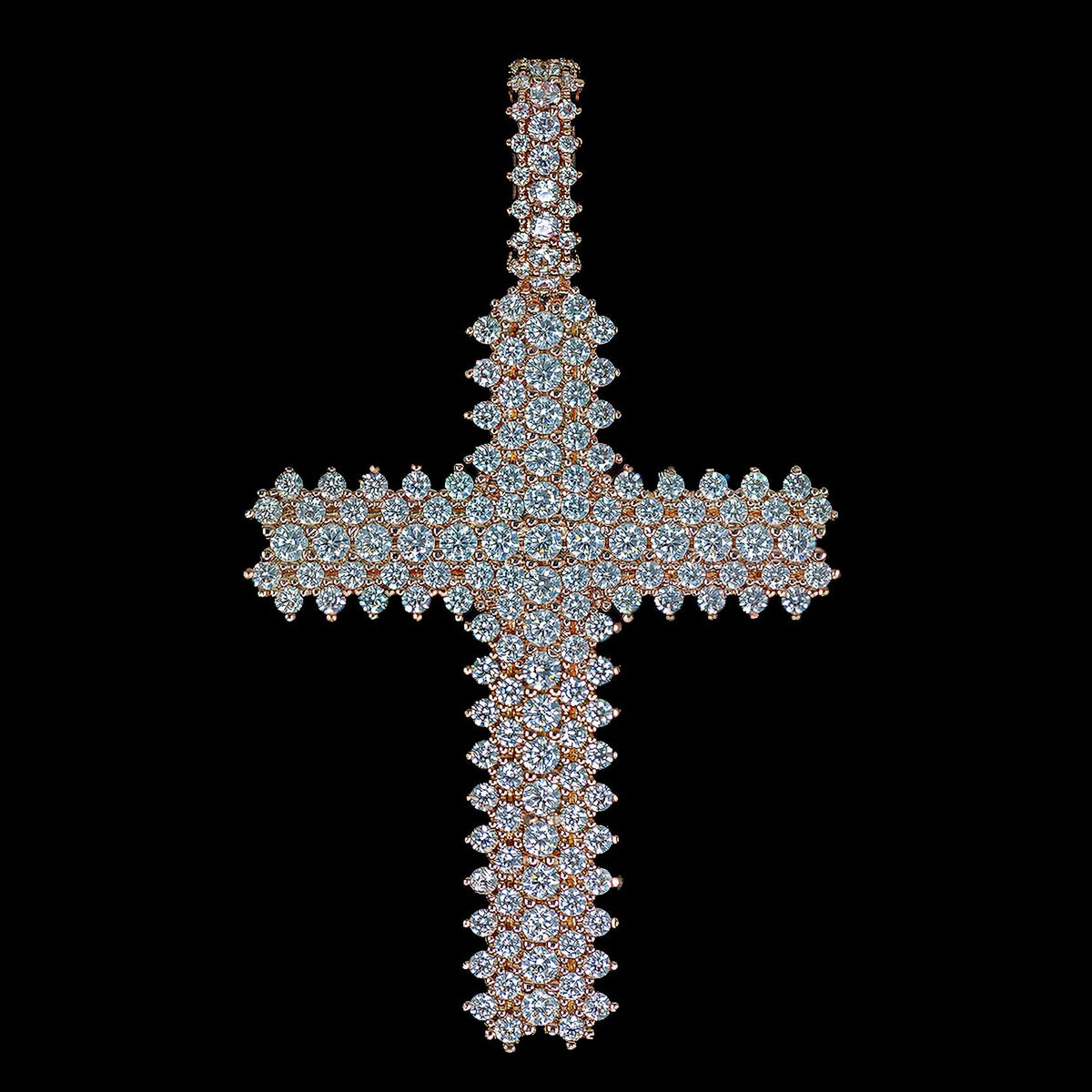
- Iced-out crosses (Jesus pieces, Catholic crosses, Egyptian ankh)
- Religious figures (Jesus heads, Madonna, Buddha)
- Cultural symbols (hamsa hands, evil eyes, six-pointed stars)
- Custom symbolism (hometown shapes, family initials, tribute pieces)
The pendant became a way to communicate values, not just affiliations. A diamond-iced cross said something about the wearer that a label pendant didn't.
This era's central figures: Kanye West's Jesus pieces, Lil Wayne's various religious pieces, T.I.'s family initial pendant.
Era 4: Custom one-of-ones (2015-present)
The current era is defined by hyper-custom pieces. Three forces drove this:
- CAD-based custom design tools made one-of-one pendants production-feasible at lower price points.
- Lab-grown diamonds and high-grade CZ made fully-iced custom pieces affordable.
- Social media made custom pieces marketing assets, not just personal items. A custom piece designed for Instagram drives the design choices.
Examples that defined the era:
- Migos custom pendants (each member with their own thematic design)
- Travis Scott's Cactus Jack and Smiley Face pieces
- Pharrell's continued iconic custom work
- Rick Ross' Maybach Music Group pendants
- Lil Uzi Vert's diamond-implant forehead piece (extreme version of pendant culture)
The current move: pendant size has shrunk slightly from peak 2000s but iced density has increased. Pieces are smaller (1-3 inches) but pavé-set wall to wall.
What this means for buying
If you're buying a pendant in 2026, you have all four eras of style available to you:
- Era 1 inspired: oversized gold, minimal stones, name plates, initials
- Era 2 inspired: maximalist iced custom pieces, label or brand-style designs
- Era 3 inspired: religious or symbolic pieces with personal meaning
- Era 4 inspired: custom one-of-one pieces designed specifically for you
Most modern wearers mix eras. A custom Era 4-style pendant on an Era 1-style heavy gold chain. An Era 3-style cross on an Era 2-style fully-iced cuban link.
SKRT's approach
SKRT pendants pull from all four eras. The animal pendants collection draws from Era 1 symbolism. The iced-out collection draws from Era 2 maximalism. The religious pendants collection draws from Era 3. Custom pendant requests draw from Era 4.
Every era has pieces worth owning. The trick is picking pendants that feel like you, not just pieces that look expensive.
Pro tip: if you're picking your first iced-out pendant, choose by symbolism (what it means to you) over style (what it looks like). A pendant you connect to wears better and lasts longer in your rotation than a pendant you bought for the look alone.
Bottom line
Forty years of pendant culture has given modern buyers the broadest possible palette. From oversized gold to custom CAD-designed iced one-of-ones, the entire history is available. Pick by meaning, then by style.
Browse SKRT pendants across all categories.
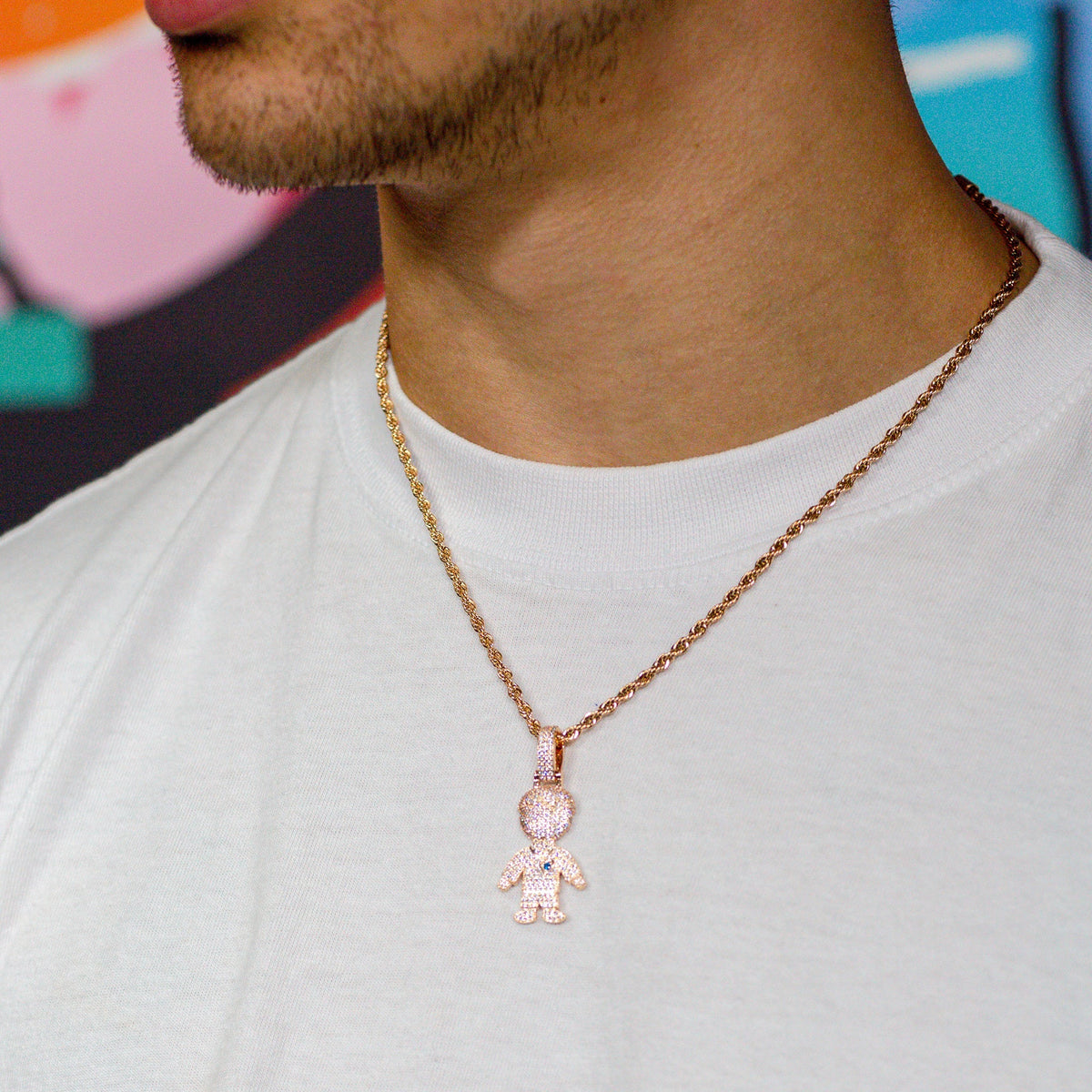
SKRT picks fitting this guide: the Iced Out Baguette Cross in 18K White Gold, the Iced Out Baguette Hamsa Hand in 18K Rose Gold, and the Iced Out Broken Heart in 18K Rose Gold.
Share:
What Is 18K Gold? When to Pay More for the Karat
What Is a Tennis Chain? Why It's Called a Tennis Necklace