



Gold plated means a layer of gold has been bonded to the surface of another metal. The gold is on the outside; the core is something else, such as brass, sterling silver or stainless steel. On SKRT chains, bracelets, anklets and pendants, it means heavy 18K gold plating over a 316L stainless steel core.

Reading "18K gold plated" on a label
On a plated piece, the karat describes the gold layer, not the piece. "18K gold plated" tells you the surface is an 18K gold finish. It does not tell you the piece is 18K gold, and it should never be shortened to a bare "18K." US jewelry guidelines expect plated items to be labeled as plated, and when they carry a stamp, it should be a qualified one, such as 18K GP for gold plated or HGE for heavy gold electroplate.
How gold plating is done
Most plating is electroplating. First the piece is cleaned until no oil or dust remains, because gold bonds poorly to a dirty surface. Then it goes into a bath of dissolved gold and is wired to an electric current. The current draws gold out of the solution and deposits it on the metal. More time in the bath builds a thicker layer. Nobody dips jewelry in melted gold.
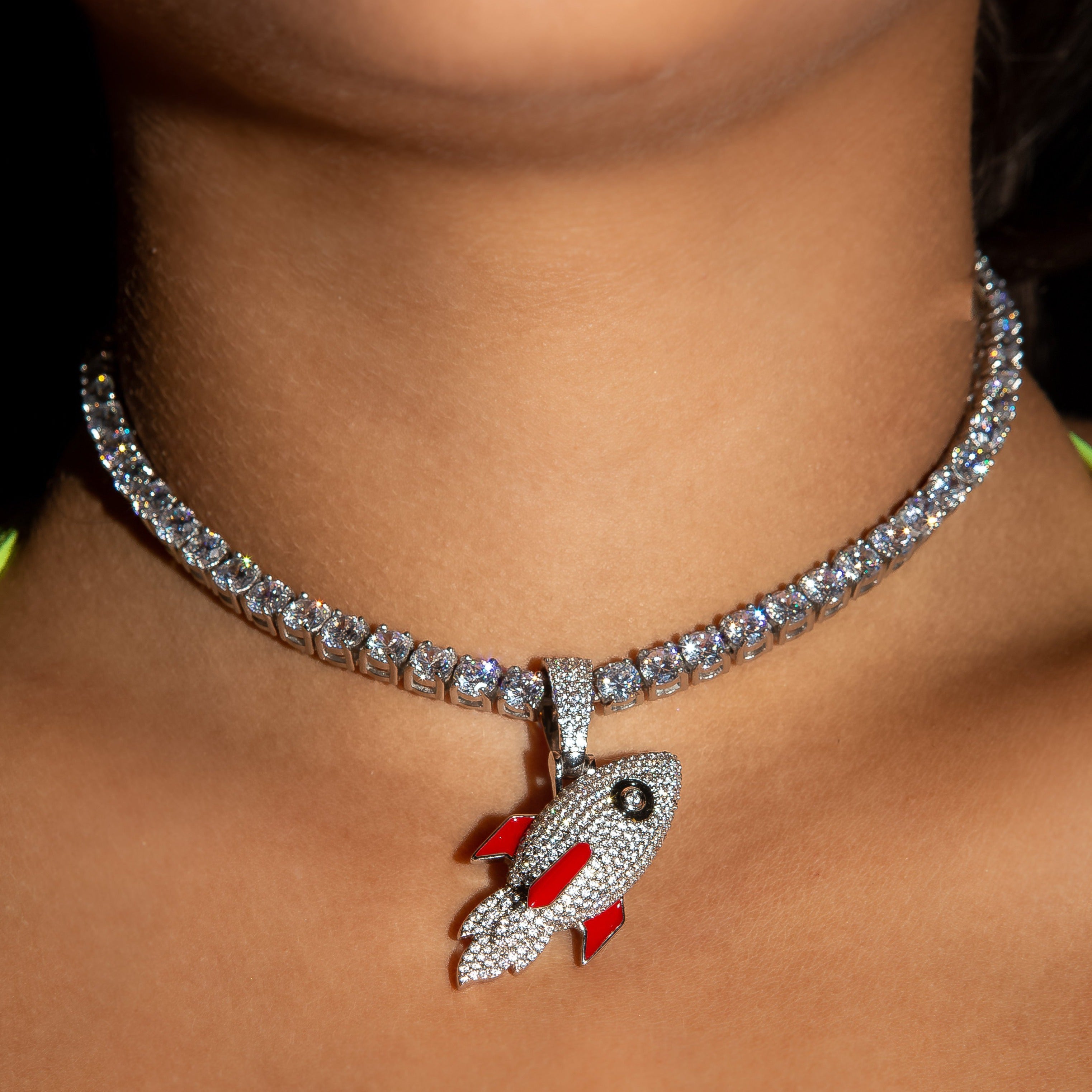
On an iced piece, the metal holding the settings is what gets plated. What sits inside the settings is not.

Plated, filled, vermeil or karat gold
These labels look alike in a listing and mean very different things:
- Flash plated: a very thin layer. It looks identical on day one and wears through fastest.
- Heavy gold electroplate: a thicker plated layer meant for regular wear, often marked HGE.
- Gold filled: a much thicker layer of karat gold bonded to a base metal with heat and pressure, marked GF.
- Vermeil: gold plating over sterling silver rather than a base metal.
- Karat gold: gold alloy from 10K to 24K all the way through, with no separate layer at all.
SKRT describes its finish as heavy 18K gold plating, and you can read more about how SKRT pieces are made in our materials explainer.
Why the core matters
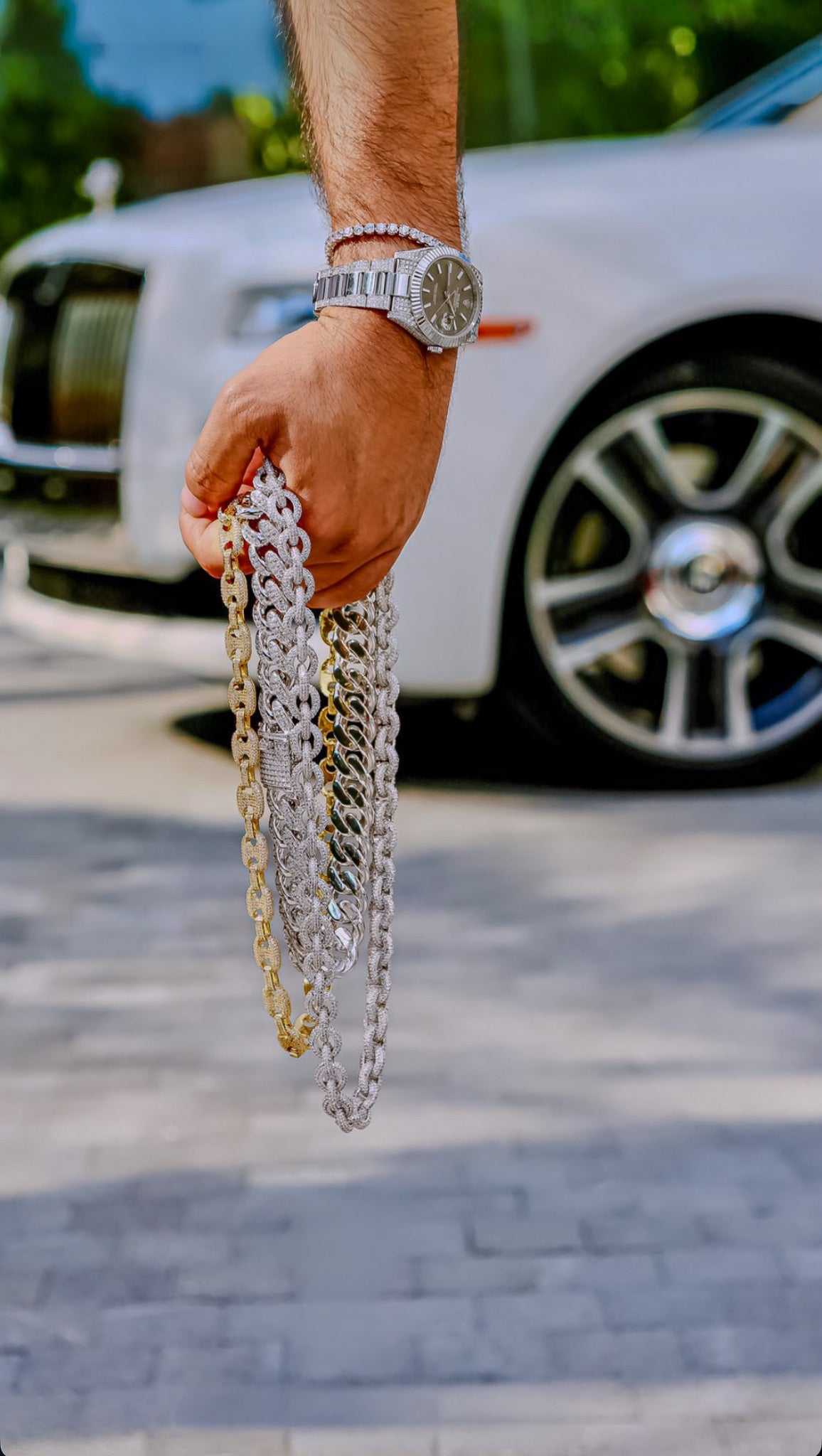
The metal under the gold decides how a plated piece feels and ages. Brass and copper are cheap and easy to plate, but where the layer wears through they can darken and mark the skin. Sterling silver underneath can tarnish once exposed. SKRT uses 316L stainless steel, a low-carbon grade known for resisting corrosion. It is hypoallergenic for most skin, and it is stiff enough that a wide link such as the Cuban Link Chain in White Gold - 12mm holds its shape without asking the plating to do structural work.
What wears, and where
Plating does not fail all at once. It thins slowly wherever metal rubs metal or a hard surface: the clasp, the inside of a bracelet, the back of a pendant, the links that touch as a chain moves. Chlorine, saltwater, perfume, harsh cleaners and abrasive polishes speed that up. A heavier layer and good habits slow it down. That is why SKRT builds its pieces for daily wear, backs them with SKRT's Lifetime Guarantee, and spells out the care rules below. For the bigger buying question, read is gold plated jewelry worth it.
Care that protects a plated finish
Treat plating as a finish, not as bare metal:
- Sweat, rain and hand washing are fine.
- Pools, hot tubs and saltwater are not, and the piece comes off before a long hot shower.
- It goes on after perfume, cologne and lotion have dried, and comes off first at night.
- A soft microfiber cloth after each wear clears sweat and oils.
- Once a month: 2 to 3 minutes in lukewarm water with a drop of mild dish soap, a gentle pass with a soft toothbrush, a rinse, then pat it dry right away.
- No toothpaste, abrasives, ultrasonic or steam cleaners, alcohol or silver dip, ever.
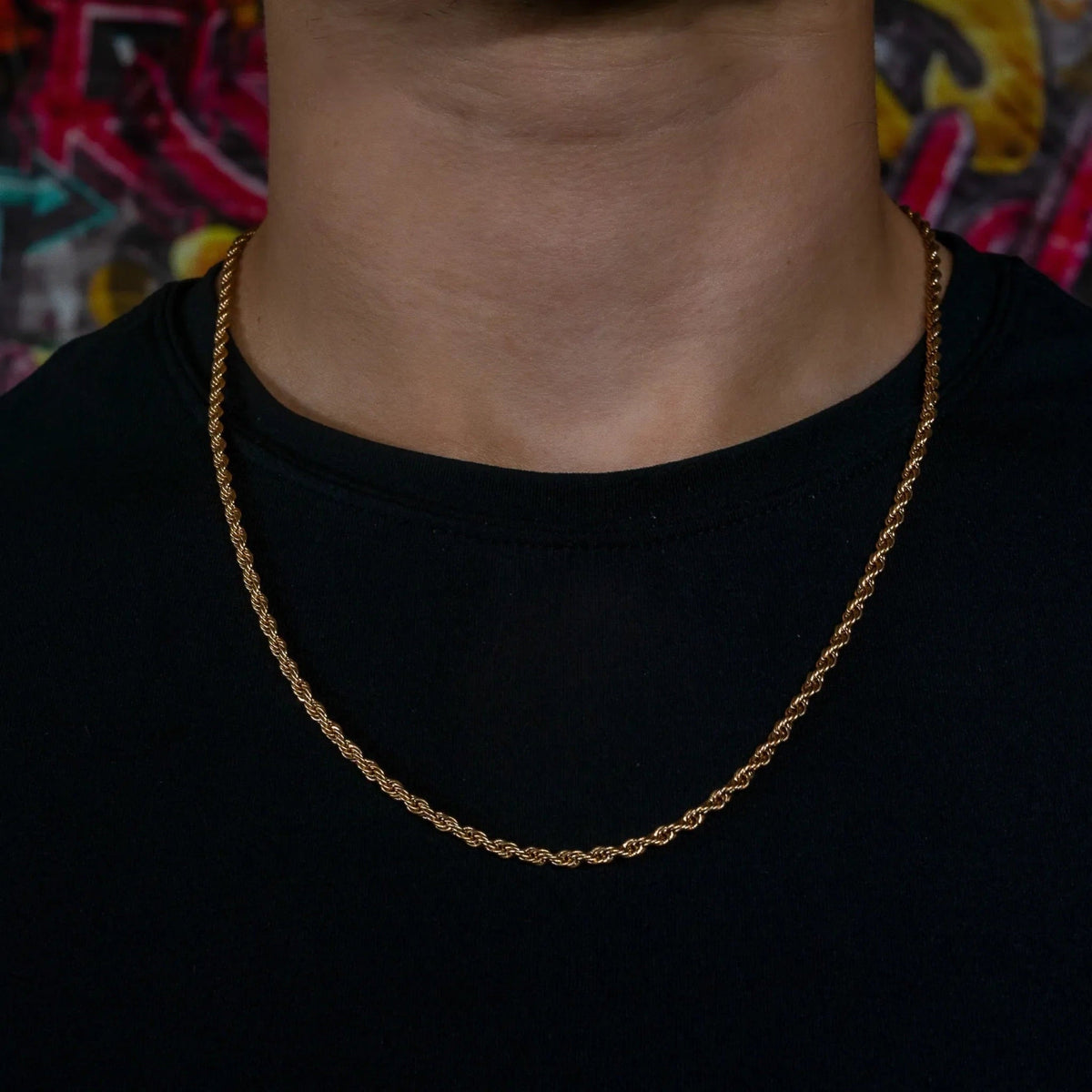
Keep each piece in its own pouch or box somewhere dry. The Rope Choker/ Necklace in Rose Gold - 3mm gets the same treatment as a wide Cuban. The full routine is on our Care Instructions page.
Quick answers
Is gold plated the same as gold filled?
No. Gold filled carries a much thicker layer of karat gold, bonded with heat and pressure. Plating is applied with an electric current and is thinner.
How long does gold plating last?
It depends on the thickness, the core and the care. A flash plate can wear through quickly. Heavy plating over steel, kept out of pools and off in hot showers, is made for daily wear.
Can gold plated jewelry get wet?
Rain, sweat and hand washing are fine. Chlorine, saltwater and long hot showers are what wear plating down.
Plain plated rope, made for every day. See the Rope Chain in Rose Gold - 3mm.


Share:
What Does Iced Out Mean? How to Read and Choose Iced Jewelry
What Is Cubic Zirconia? How It Is Made, Graded and Worn