
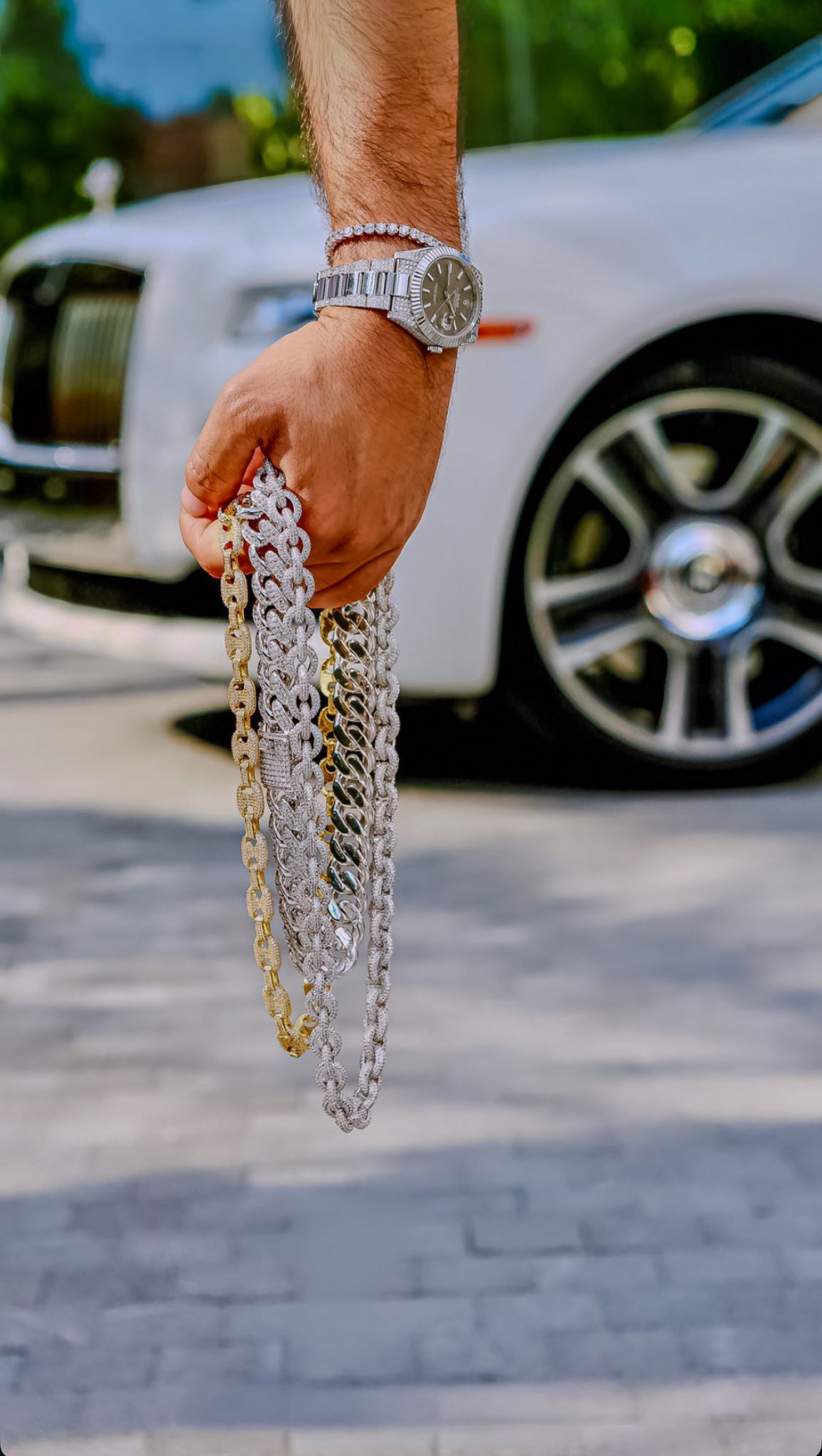
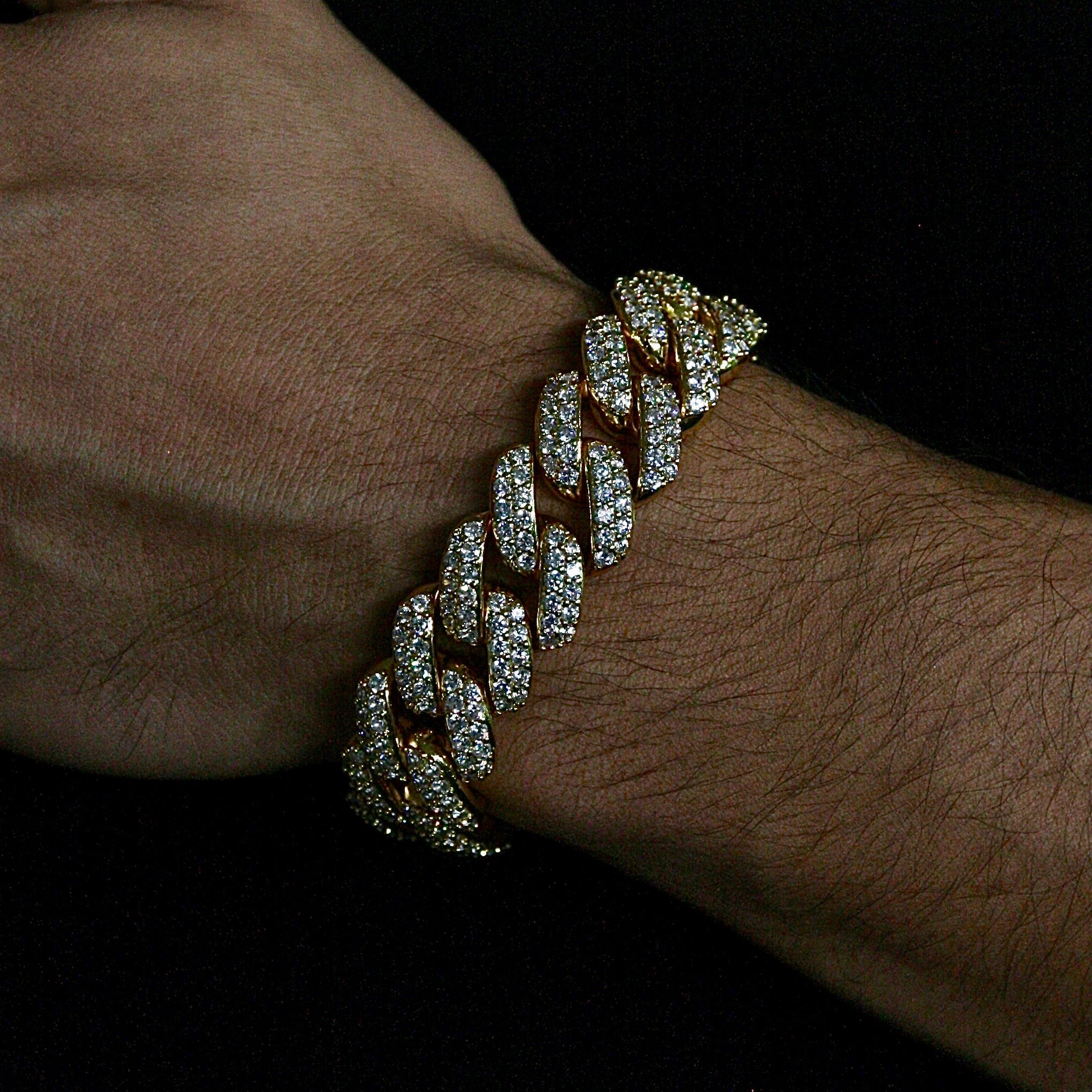
When buying gold jewelry in person, you can check the hallmark with a loupe, test the weight in your hand, and feel the warmth of real metal. Online, you have a listing, photos, and reviews. The signals you read off those three need to do the same work.
Here are the five reliable filters for separating real gold listings from fakes.
1. The hallmark detail
Real gold jewelry sold in the US must carry a hallmark stamping the karat and (usually) the maker's mark. Standard stamps include:
- 10K (or 417) for 10 karat
- 14K (or 585) for 14 karat
- 18K (or 750) for 18 karat
- "GP" or "EP" stamped after the karat indicates plated (e.g., 18KGP = 18K gold plated)
If the listing shows close-up photos of the hallmark on the actual product, that is a strong signal. If the listing says "18K gold" but the photos show no hallmark visible anywhere, treat that as a red flag.
For plated pieces, look for honest labeling. A piece marked "18K gold plated" with a clear hallmark is more trustworthy than one marked "solid 18K" with no hallmark photo and a price too low to be solid gold.
2. The price-to-weight ratio
Solid gold has a floor price based on market value. A 14K cuban chain weighing 50 grams contains roughly 29 grams of pure gold. At current spot prices, that is hundreds of dollars in melt value alone, before manufacturing.
If a listing shows a 50g solid 14K cuban for $300, the math does not work. Either the chain is plated and mislabeled, the weight is overstated, or both.
For plated pieces, the price-to-weight rule does not apply (the gold content is small). Plated price reflects design, brand, and quality of plating, not melt value.
3. The brand history
Look the brand up before buying. A real jewelry brand has:
- A working website with policies (returns, warranty, shipping)
- An "About" page that names the founder or company history
- Customer reviews across multiple platforms (Trustpilot, Google, BBB)
- An identifiable business address
- Social media with consistent posting history, not just product photos
Brands without these signals are usually drop-shippers or AliExpress resellers. The pieces may exist but the quality is whatever the supplier sent.
4. The reviews pattern
Read the one-star and two-star reviews, not the five-star ones. Five-star reviews are easy to manipulate. One-star reviews tell you what goes wrong.
Look for these patterns:
- "Color faded in months" indicates thin plating or low-quality base metal
- "Stones fell out" indicates weak prong settings
- "Tarnished in weeks" indicates very thin plating or base metal allergies
- "Different from photo" indicates over-edited product images
A brand with mostly five-star reviews and a handful of detailed three-star reviews is more trustworthy than one with all five-stars (which suggests review manipulation).
5. The return policy
A confident brand offers a clear return window. Look for:
- At least 14 days to return
- A warranty period (lifetime is standard for established brands)
- A clear process for sizing exchanges or damage claims
- Real customer service contact (not just an email form)
If the return policy is buried, vague, or non-existent, the brand expects you not to return.
What SKRT does
Hallmarks visible in product photos. Honest plating labels. Detailed product specs (weight, dimensions, stone count). 14-day return window. Lifetime warranty on plating. US-based customer service.
Browse the SKRT collection with confidence in the transparency. Every piece has photos, specs, and an honest description.
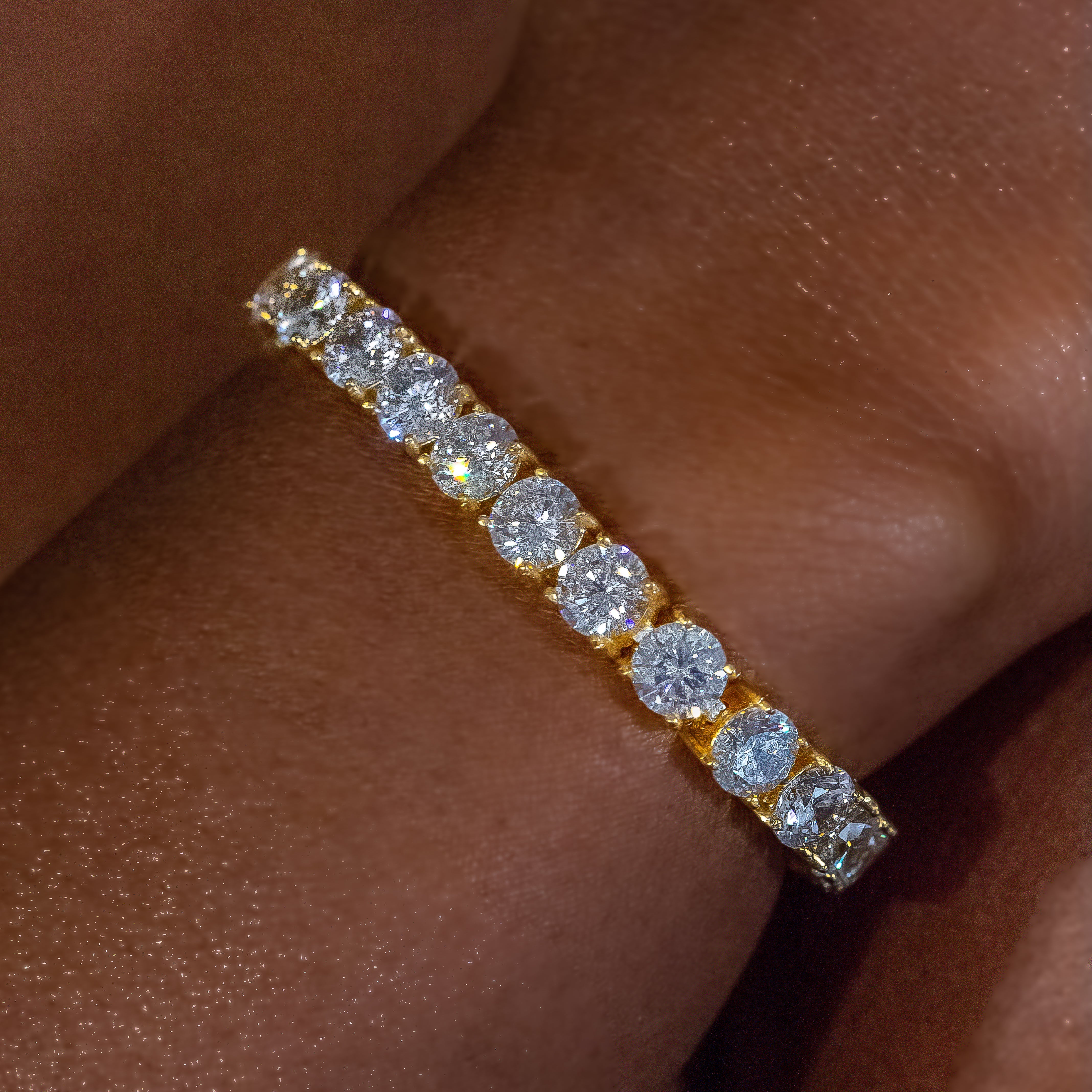
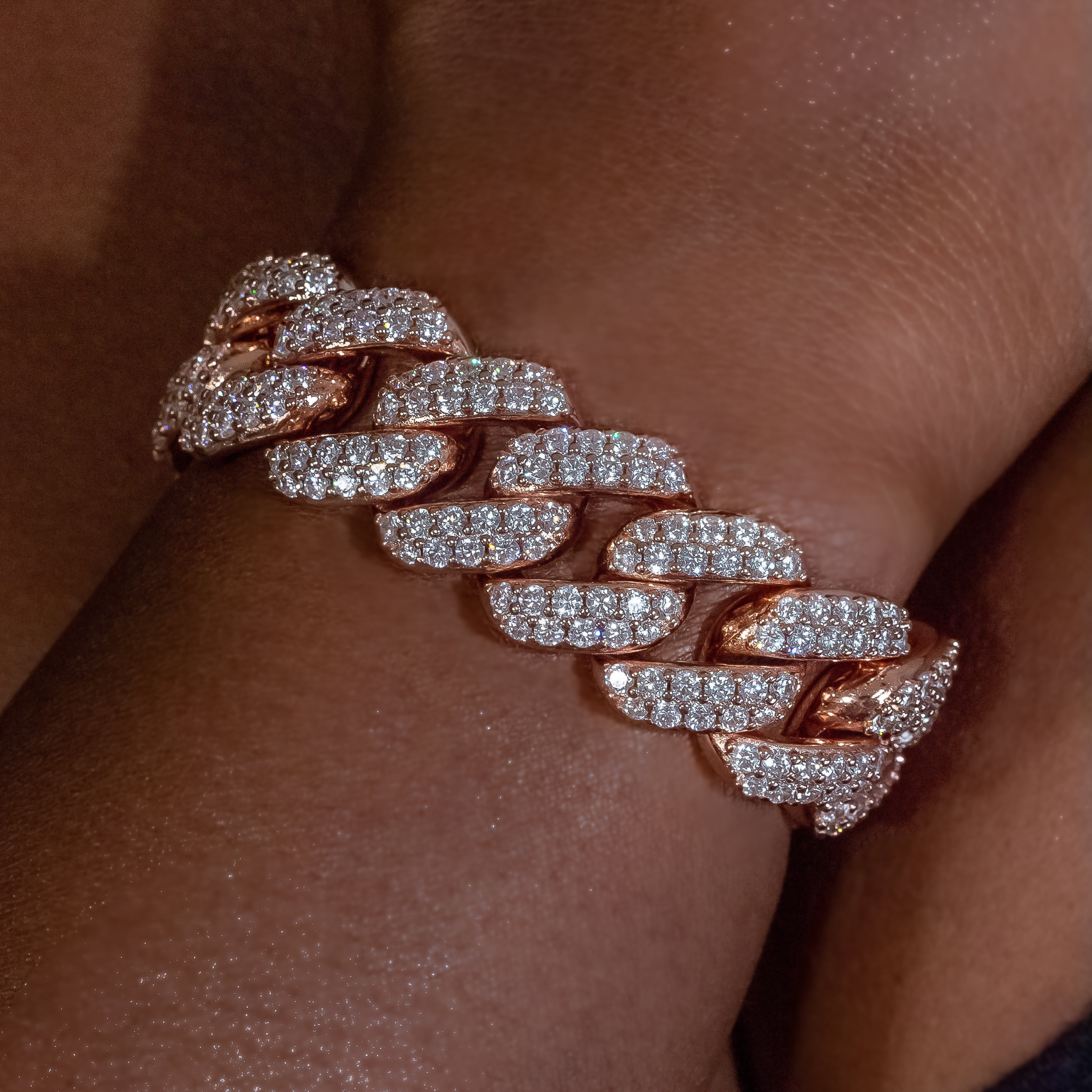
SKRT picks fitting this guide: the 12mm Cuban Link Chain in 18K Rose Gold and the 6mm White Gold Tennis Chain in 18K White Gold.
Share:
SKRT vs Mall Jewelers: What You Get for the Same Price
Why SKRT Cuban Links Do Not Tarnish (And How We Test Them)