


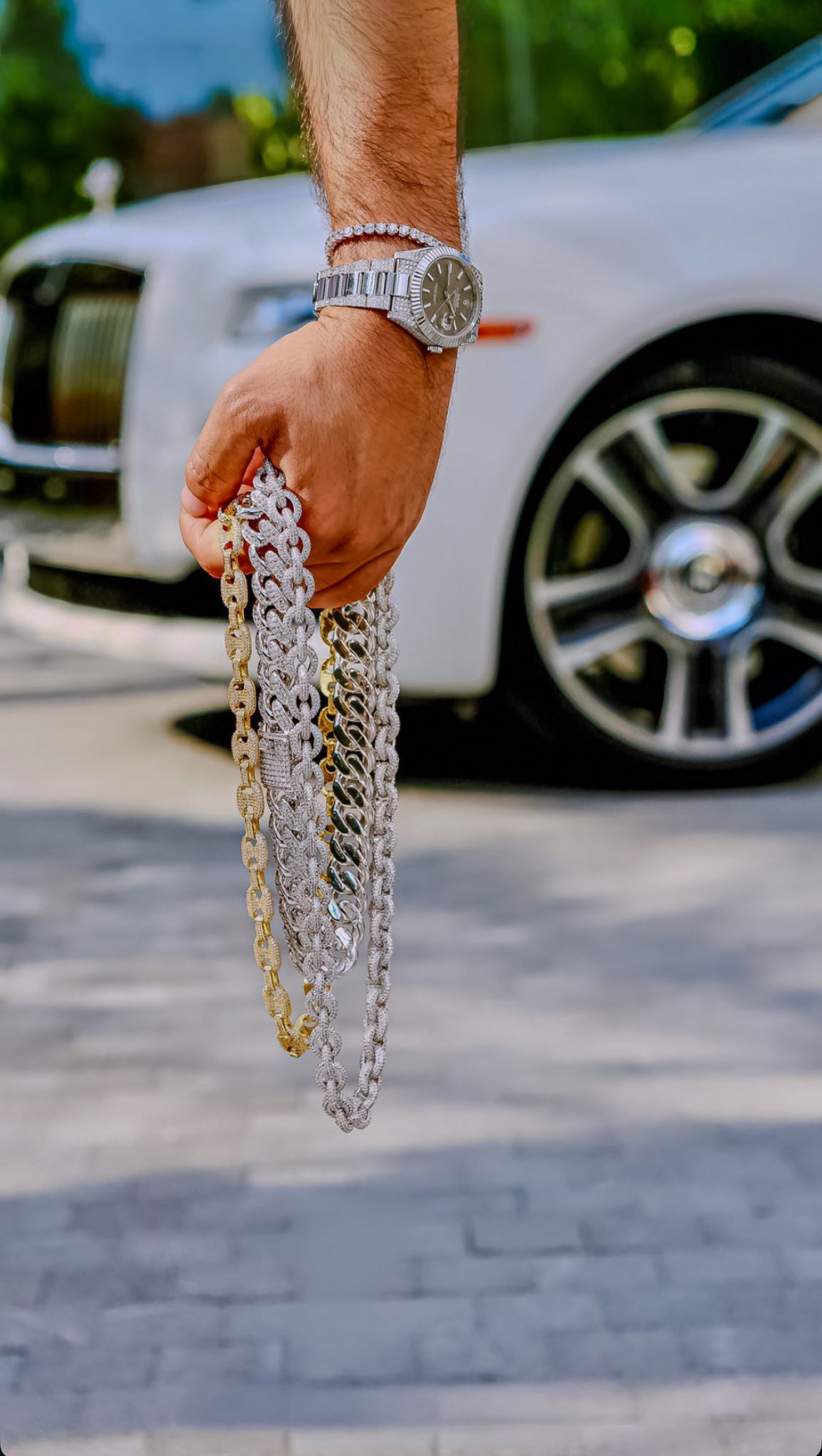
When you shop iced-out cuban links, you'll see two cut styles: Miami cuban and prong cuban. They look superficially similar but are constructed completely differently. Here is what separates them.
Miami cuban: bezel-set, heavier, classic
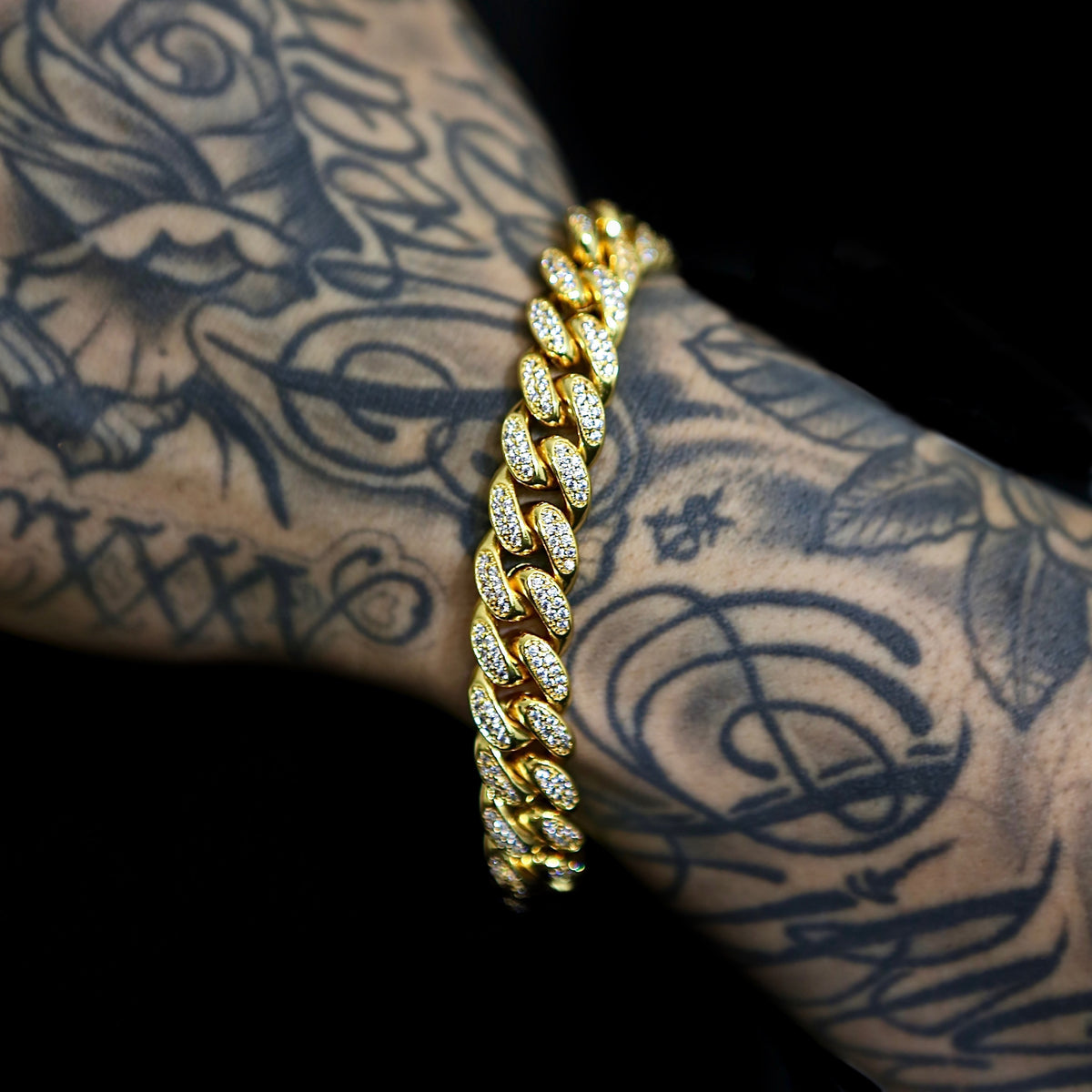
A Miami cuban has stones bezel-set into the link surface. Each stone sits in a small metal cup that wraps around the stone's girdle, holding it in place by surrounding it.
Visually, this gives:
- A heavier overall look. The link looks like solid metal with stones embedded.
- Less stone visibility because the bezel covers part of each stone.
- More durability. Bezel settings are the most secure stone-setting style in jewelry.
- A classic, 1980s-1990s hip-hop read.
The trade-off is sparkle. Bezel-set stones look bright but don't catch as much light from the sides because the bezel walls block angled light. They look great front-on, less brilliant from below.
This is the cut you see in archival photos of artists from the bling era. Slick Rick, Run-DMC, early Cash Money. The cut is heritage hip-hop.
Prong cuban: prong-set, brighter, modern
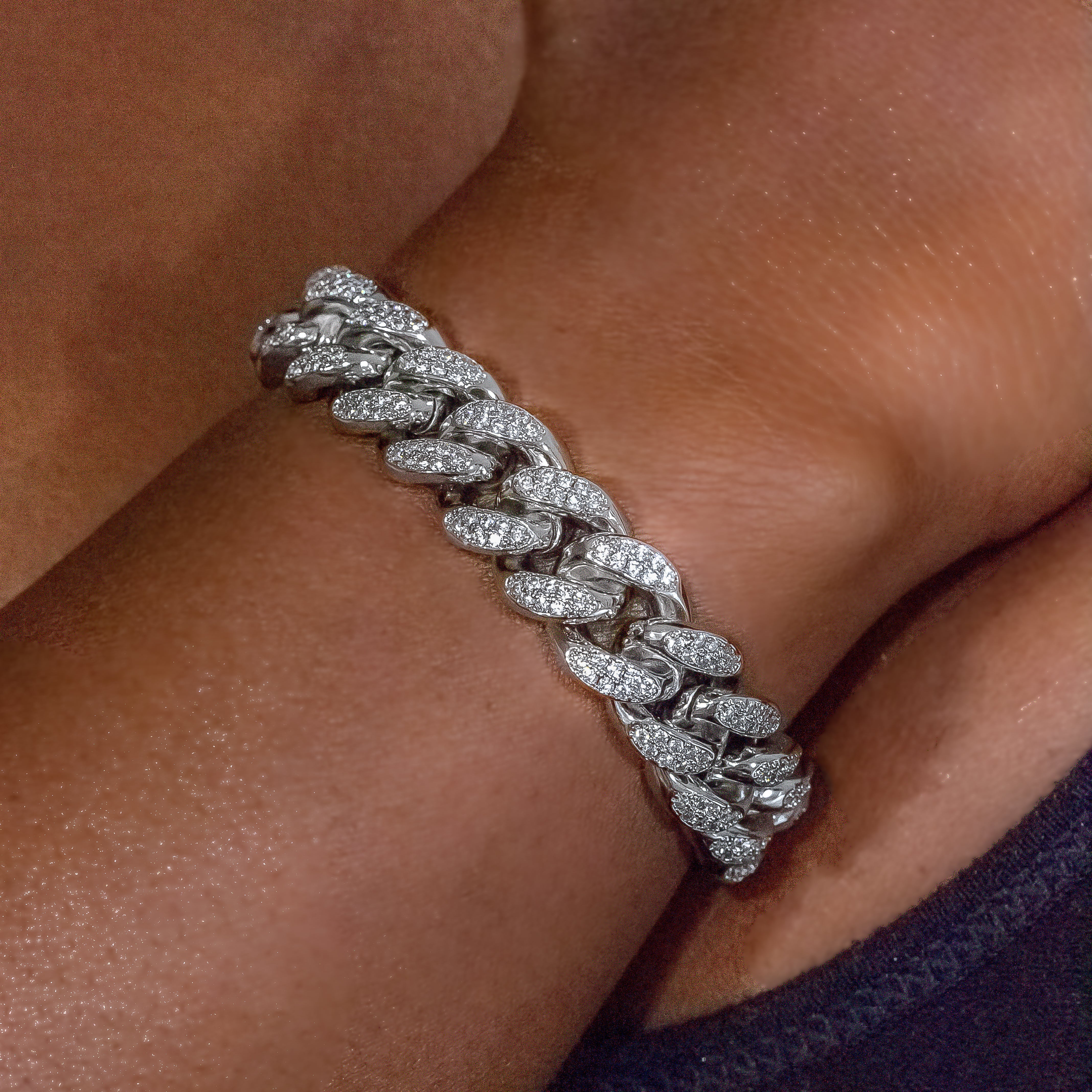
A prong cuban has stones held by tiny metal prongs that grip the stone from 4 sides. The metal between stones is much thinner because the prongs only need to hold, not surround.
Visually, this gives:
- A brighter overall look. More stone surface is exposed to light.
- A finer, more delicate appearance. The chain reads less heavy.
- Maximum sparkle. Prong settings let light enter and exit from every angle.
- A contemporary, 2010s-onward read.
The trade-off is durability. Prongs are more vulnerable to bending if the chain catches on a jacket zipper or door handle. A bent prong can release a stone over time.
This is the cut that dominated the iced-out movement of the 2010s through today. Jay-Z, Drake, Travis Scott, the modern era.
How to tell them apart visually
Hold the chain at an angle in good light:
- If the stones look like jewels embedded in solid metal: Miami cuban.
- If the stones look like rows of small diamond mini-rings linked together: prong cuban.
Another quick test: feel the chain. Miami cuban feels heavier and more solid in the hand. Prong cuban feels lighter and more articulated.
Which one to buy
Pick Miami cuban if:
- You want a classic, heritage look
- You prioritize durability over maximum sparkle
- You wear the chain through physical activity (work, gym, contact sports)
- You like the heavier hand feel
Pick prong cuban if:
- You want maximum sparkle for photos and bright lighting
- You prioritize visual brilliance over hand-feel weight
- You wear the chain primarily for going out, not heavy daily abuse
- You like the modern, finer look
Pricing difference
At equivalent gold weight and stone quality, prong cubans are typically 10 to 20 percent more expensive than Miami cubans because the prong-setting process is more labor-intensive. Each prong has to be hand-bent into position.
If two pieces are priced identically and one is "Miami" and the other "prong", the prong piece is using lower-grade stones or thinner gold to match the price.
Pro tip: for a piece you want to wear daily without thinking about it, Miami cuban is the right call. For a piece you want to photograph and wear out, prong cuban delivers harder.
Bottom line
Both cuts are legitimate and have a place in any serious jewelry rotation. Miami cuban for daily wear and durability. Prong cuban for photo-ready sparkle.
The SKRT cuban link collection labels each piece's setting style on the product page. Most SKRT iced-out cubans are prong-set in the modern style, with select Miami-cut pieces in the classic line.
Share:
Necklace Length Guide for Men: 18 to 30 Inches Compared
Why Men Are Wearing More Jewelry Than Ever