

47th Street between 5th and 6th Avenue in Manhattan is two blocks long. Three thousand jewelry businesses operate on those two blocks. The street produces more wholesale jewelry than any other equivalent stretch of land on the planet. And from the 1980s onward, that street is where hip-hop jewelry got made.
Here is the history of how that happened.
The pre-hip-hop era
The Diamond District started in the early 1900s. Jewish jewelers fleeing antisemitism in Europe settled in Manhattan and opened businesses on what was then a quiet midtown street. By the 1940s and 1950s, the corridor had become the wholesale center for diamonds entering the US market.
For decades the customer base was fine jewelry stores (Tiffany, Cartier, Harry Winston) and engagement-ring buyers. The pieces were classic: solitaires, three-stone rings, line necklaces. Hip-hop did not exist yet, and the Diamond District served a different aesthetic.
The 1980s shift
When hip-hop emerged in New York in the late 1970s and early 1980s, the artists buying expensive jewelry for the first time were going to the same Diamond District their parents and grandparents had heard about. The corridor had two things hip-hop needed: real diamonds at wholesale prices, and skilled jewelers who could make whatever was asked for.
LL Cool J, Run-DMC, Slick Rick, and other early hip-hop artists started commissioning custom pieces from Diamond District jewelers. The artists brought the new aesthetic: bigger, bolder, more stones, more gold, more attitude. The jewelers adapted to the customer.
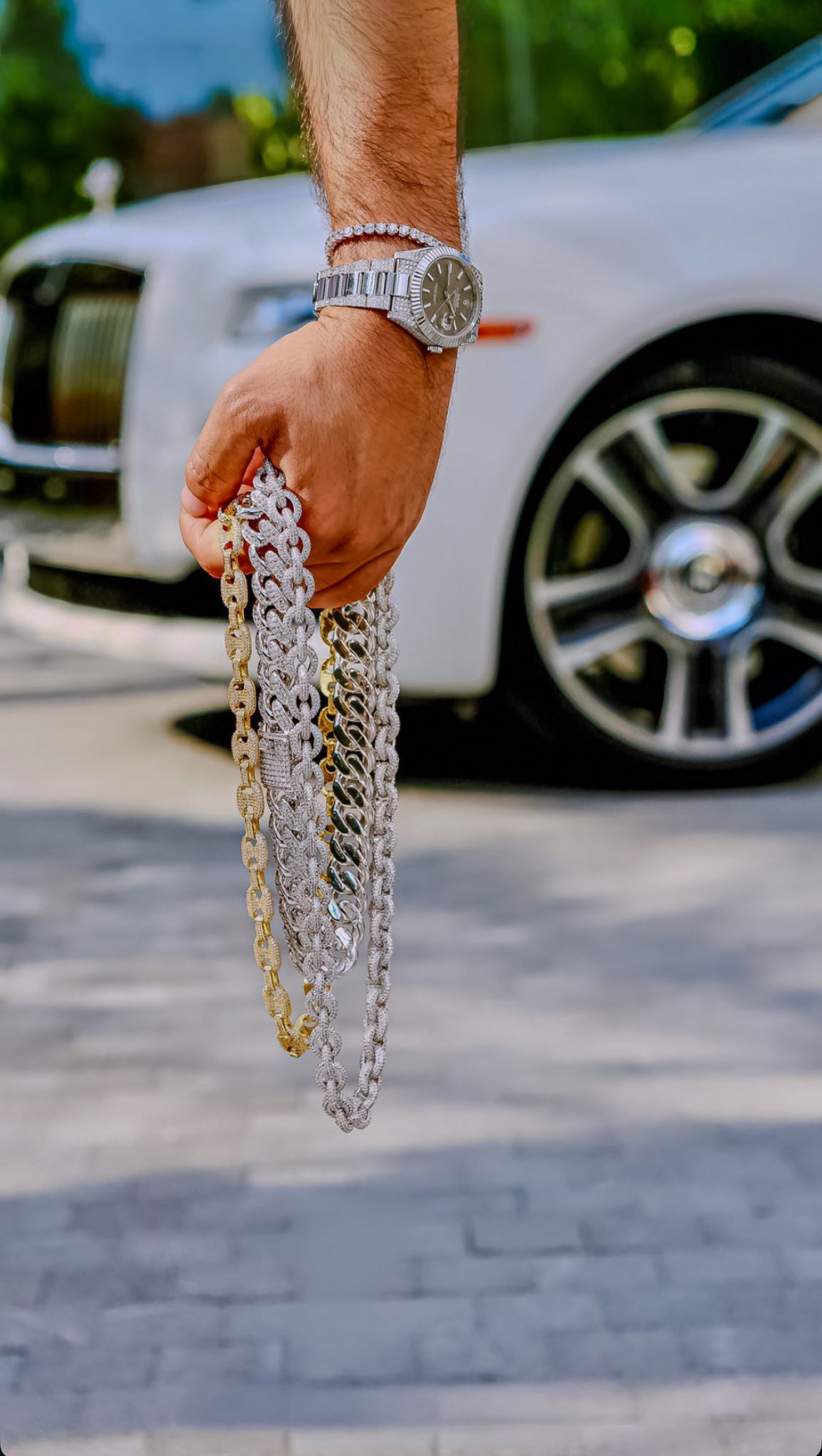
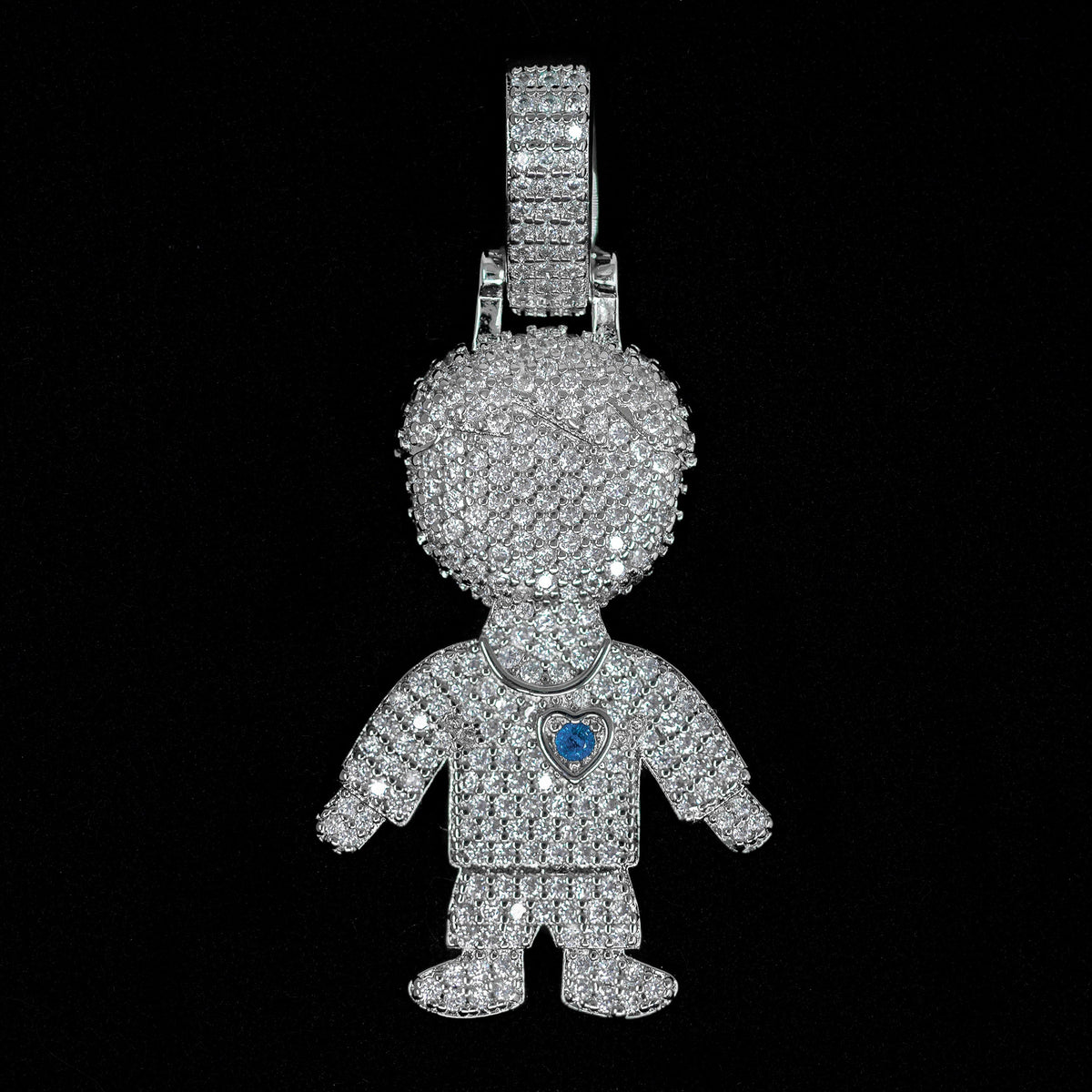
The cuban link, the rope chain, the iced-out pendant. All three became Diamond District specialties by the mid-1980s. The pieces were not invented there, but they were perfected there.
The 1990s explosion
By the 1990s, hip-hop had become a billion-dollar industry. Artists were buying multi-piece sets, custom commissions, and statement pieces that ran into six figures. The Diamond District jewelers who specialized in hip-hop work became famous in their own right.
Jacob Arabo (Jacob the Jeweler) opened on 47th Street in 1986. By the early 2000s, he was making custom pieces for Jay-Z, Diddy, Pharrell, and every major hip-hop artist working at the time. His shop became a documented destination, appearing in music videos, in lyrics, and in the cultural imagination of what "real" jewelry meant.
Other Diamond District jewelers built their own hip-hop reputations: Avianne Brothers, Tito's Custom Jewelers, Eliantte, Greg Yuna. Each had a different aesthetic and clientele, but all of them operated within the same few blocks.
What made the Diamond District unique
Three structural advantages:
- Material access. Wholesale diamonds and gold from the same block, no middleman markups.
- Skilled labor. Multi-generational families of jewelers, gem-setters, polishers, and chain-makers all working within walking distance of each other.
- Cultural exchange. A 24-hour visit to 47th Street put an artist in contact with five jewelers, ten ideas, and immediate quotes. The collaborative pace was impossible to match anywhere else.
The street effectively functioned as a single jewelry studio with three thousand specialists.
The 2000s and 2010s
As hip-hop globalized, jewelry production globalized with it. Florida, California, Texas, Atlanta, and overseas markets all developed their own hip-hop jewelry scenes. The Diamond District remained the most concentrated, but no longer the only.
The aesthetic shifted too. The 1990s "biggest piece possible" energy gave way to 2000s clean iced-out, then 2010s tasteful luxury (smaller, higher-quality, more refined). The Diamond District jewelers who survived the transitions were the ones who adapted to each era.
The corridor today
In 2026, the Diamond District is still the jewelry capital of the East Coast. New brands open every year. Established jewelers from the 1980s and 1990s still operate. Custom commissions still happen on a daily basis for major artists, athletes, and entrepreneurs.
The corridor has a tourism element now too. Walk through on any weekday and you will see street-side hawkers ("you want a Rolex?"), security guards on every shop door, and dozens of jewelry stores with display windows facing the sidewalk.
The wholesale work happens upstairs. The retail happens at street level. Both have been there for a century.
What this means for SKRT and modern brands
Modern hip-hop jewelry brands like SKRT, GLD, King Ice, and others operate outside the Diamond District. Production happens through partner factories with quality control standards we audit. The Diamond District model (custom commissions for individual artists) is high-priced and slow. The modern model (catalog production with consistent specs) is faster and reaches a wider audience.
The Diamond District is still where the highest-priced custom pieces get made. The modern brands serve the broader market: daily wear pieces, mid-tier statement pieces, and accessible iced-out for buyers outside the celebrity tier.
Both layers of the market exist because both are needed.
Bottom line
Two blocks of Manhattan still produce the world's most expensive hip-hop jewelry. Modern brands like SKRT serve the rest of the market with accessible, daily-wear-ready iced pieces. Two different models, both essential to how hip-hop jewelry exists in 2026.
Browse the SKRT collection for the catalog-tier take on hip-hop's signature aesthetic.
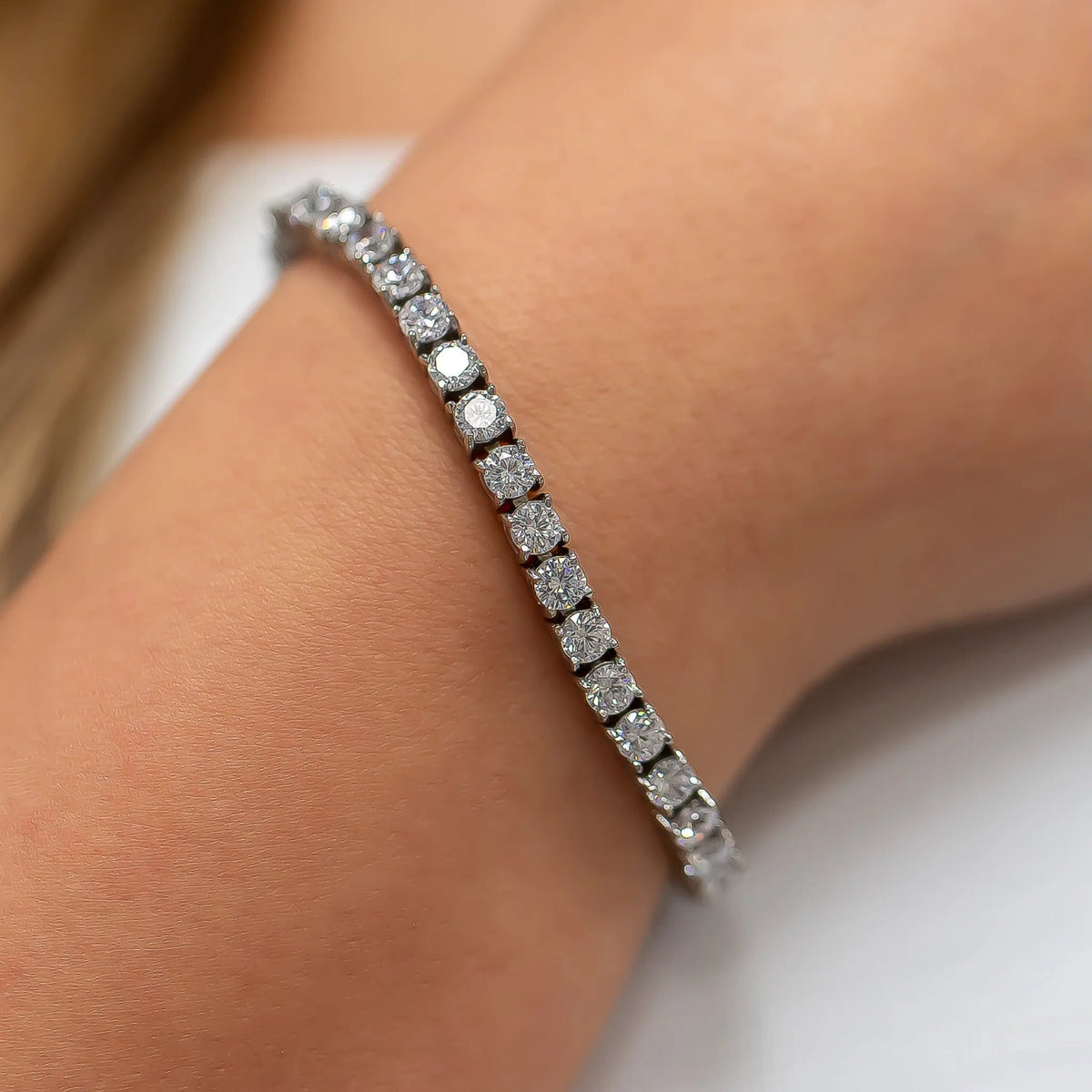
SKRT picks fitting this guide: the Diamond Baguette Cross in 18K White Gold and the 6mm White Gold Tennis Chain in 18K White Gold.
Share:
Why Successful Entrepreneurs Wear Iced-Out Jewelry
Festival Jewelry: What to Wear to Rolling Loud and Coachella