



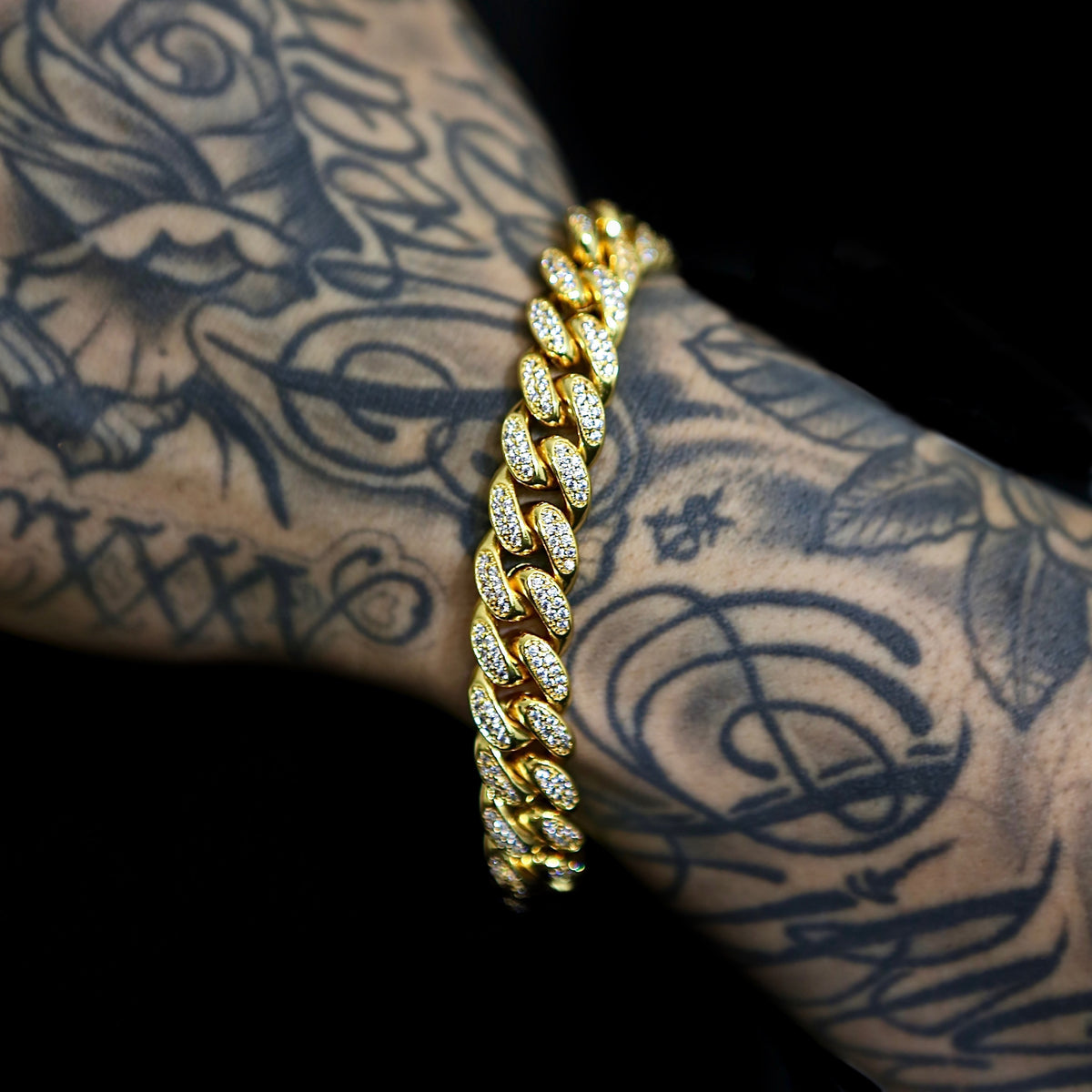
The cuban link is the default hip-hop chain in 2026. Not the rope chain, not the figaro, not the tennis chain. When someone says "hip-hop chain" without specifying, the mental image is a cuban link. That dominance is not an accident. The cuban link won for specific structural and cultural reasons that no other chain shape replicates.
Here is the full story.
Where cuban links came from
The cuban link is technically a "curb chain" variant, a chain shape that has existed in jewelry-making for centuries. What separates the cuban link is the way the links are pressed flat and tightly interlocked, so the chain lies flat against the skin instead of rolling like a rope chain does.
The "cuban" name comes from Miami in the 1970s. Cuban-American jewelers refined the curb chain into a flatter, tighter, more polished version that became the local style. The chain spread from Miami's Cuban community to the broader Miami jewelry market by the late 1970s.
By the mid-1980s, hip-hop artists visiting or based in Miami were buying cuban links from Miami jewelers and bringing the chain to New York, LA, and Atlanta. The chain's spread tracks hip-hop's geographic spread almost exactly.
Why cuban links specifically won
Three structural advantages over other chains:
1. Cuban links lie flat.
This is the biggest single advantage. A rope chain rolls. A figaro chain has alternating link sizes that twist visually. A box chain has gaps that catch on fabric. A cuban link sits flat on the collarbone, every link visible from the front, no rolling or twisting.
For photography (which became central to hip-hop culture as the visual media of the genre), flat chains photograph better. A cuban link in a photo reads as a continuous ribbon of gold. A rope chain in the same photo reads as a textured cord. The cuban link is more visually impactful.
2. Cuban links handle stones better.
When hip-hop jewelry shifted toward iced-out chains in the late 1980s and 1990s, the cuban link's flat profile made it ideal for setting stones. Each link could hold one or two stones in a tight prong setting. The continuous flat surface created the "iced cuban" look that defined the 1990s and beyond.
Rope chains can be iced but the stones look glued onto a twisted surface. Figaro chains create awkward gaps between stone clusters. Cuban links hold stones in a uniform pattern that reads as one continuous sparkle from across a room.
3. Cuban links scale.
The same basic cuban link design works at 4mm (delicate, daily-wear) or 30mm (statement, photography-only). No other chain shape scales across such a wide width range while still looking proportional.
This scalability meant cuban links could serve every tier of hip-hop jewelry: entry-level pieces for first-time buyers, mid-tier daily-wear pieces for established collectors, and statement pieces for celebrity-tier wearers. Other chain shapes specialized at certain widths but did not span the whole range.
The cultural adoption curve
The cuban link's rise tracks specific moments in hip-hop history:
- 1980s: Miami artists (2 Live Crew, early Trick Daddy era) wear cuban links as a regional identifier.
- Early 1990s: New York artists adopt cuban links after Miami trips. The chain becomes pan-East-Coast.
- Late 1990s: West Coast and Southern hip-hop adopt cuban links as the genre globalizes. Cuban becomes the cross-regional default.
- 2000s: Iced-out cuban links become the centerpiece of bling-era hip-hop. The combination of cuban link + heavy iced setting defines the visual aesthetic of the era.
- 2010s: Cuban links cross over into pop, fashion, and luxury. Designers (Louis Vuitton, Tiffany) start producing their own cuban link interpretations.
- 2020s: Cuban links are jewelry industry standard, regardless of music genre. The chain is recognized globally.
Why the cuban link will not be replaced
Three reasons:
-
The flat profile is structurally optimal for the way hip-hop styles photographs. No new chain shape can solve "lies flatter than flat".
-
The cultural association is locked in. Forty years of hip-hop imagery has trained the visual association between cuban links and the genre. New chain shapes can be added to the rotation, but cuban is the foundational reference.
-
The scalability still wins. Cuban links work at every tier and width. Any new chain shape that wants to dethrone cuban would need to match this versatility.
The closest contenders are the tennis chain (more sparkle but less versatile for everyday wear) and the figaro chain (more vintage feel but less photogenic). Neither will displace cuban as the default.
What the rise of cuban means for SKRT
Cuban links are the largest single category in the SKRT catalog. Multiple widths (4mm through 18mm), multiple metals (yellow, white, rose gold), iced and plain versions of each. The catalog reflects the chain's importance to hip-hop styling.
If you are buying your first hip-hop piece, a cuban link is almost always the right call. It is the chain that taught the entire genre what hip-hop jewelry looks like, and it remains the most versatile starting point for any collection.
Bottom line
The cuban link won because it lies flat, handles stones, and scales across widths. Forty years of hip-hop history reinforced its dominance. No replacement is coming. Browse the SKRT cuban link collection for the chain that defines the genre, in every variant.
SKRT picks fitting this guide: the 12mm Cuban Link Chain in 18K Yellow Gold and the 12mm Cuban Link Chain in 18K White Gold.
Share:
Timeless Pendants That Go With Any Fit
7 Iced-Out Pieces That Dress Up Any Streetwear Fit