


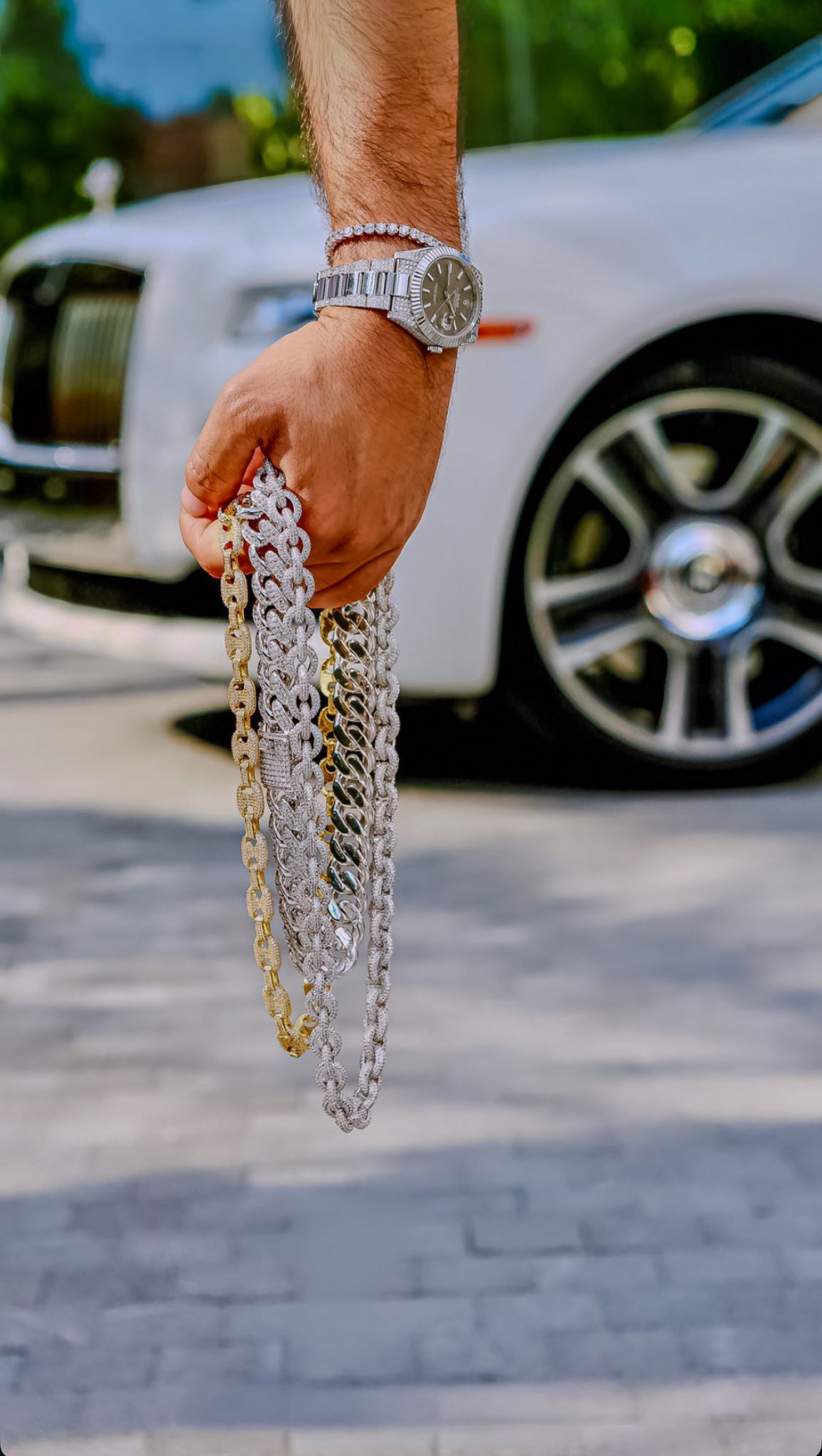
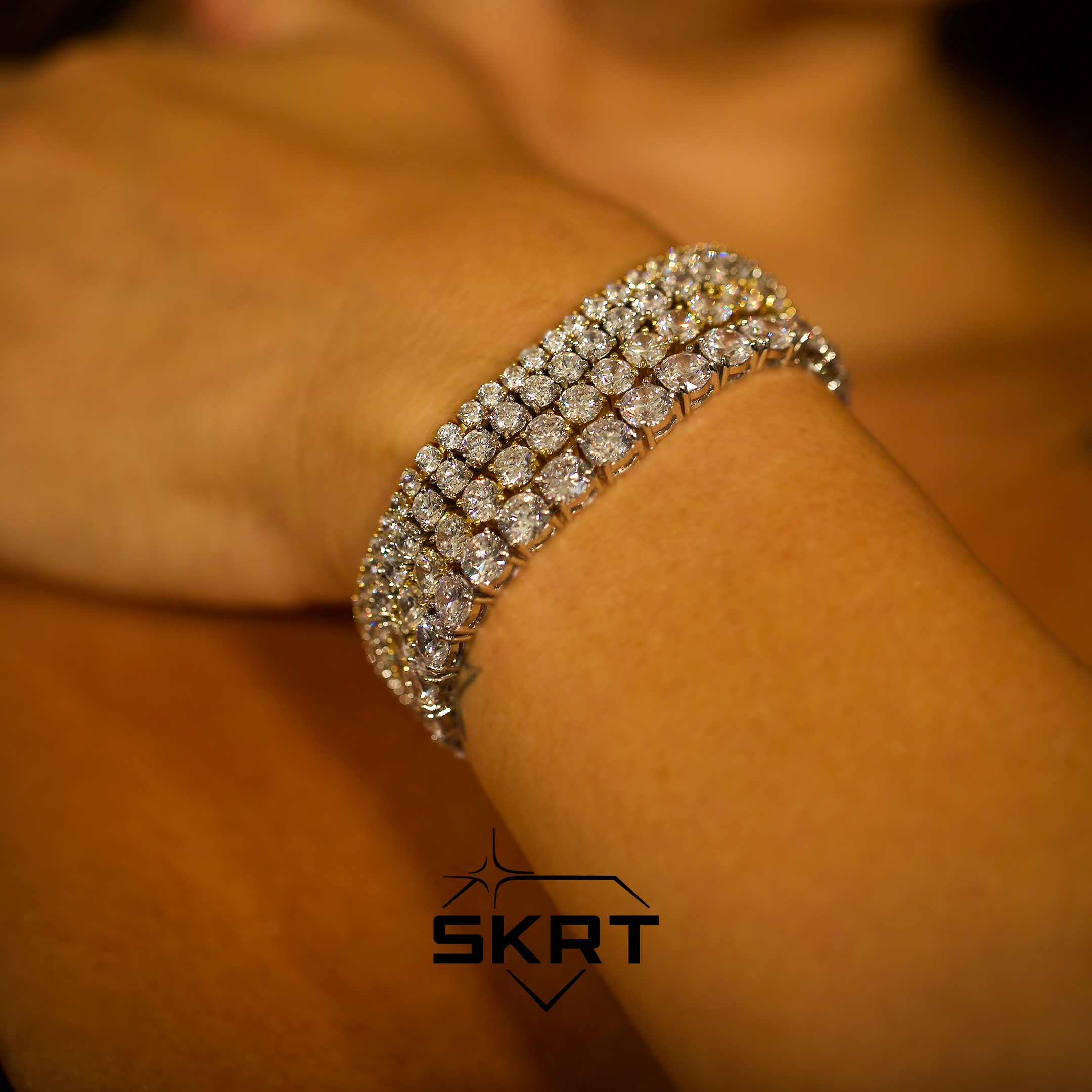
A tennis bracelet is a flexible line of identical stones, each held in a small four-prong setting, linked together so the bracelet drapes naturally on the wrist. Until 1987 it was just called a "diamond line bracelet". The name we use today came from one accident at the US Open.
The 1987 US Open story
Chris Evert was in the middle of a match when her diamond line bracelet broke. Play stopped. She asked the umpire if officials could find her bracelet before they continued. The cameras caught the moment, the broadcasters narrated it, and the next morning every jeweler in America was getting calls about "that tennis bracelet Chris Evert was wearing".
The name stuck. By 1990 the diamond line bracelet was the tennis bracelet, full stop, in every jewelry store in the country.
What makes a real tennis bracelet
Three things separate a tennis bracelet from a generic chain bracelet with stones glued on:
- Each stone sits in its own prong setting, individually mounted, not channel-poured or glued.
- The settings link to each other end-to-end through small metal connectors that flex.
- The clasp is hidden inside the same stone setting pattern so the bracelet looks continuous.
If you can see metal between the stones, or if the bracelet feels rigid instead of flexible, it is a chain with stones, not a tennis bracelet.
Stone size and count
Tennis bracelets are sized by total carat weight (CW) plus length. A 7-inch bracelet with 3mm stones holds about 50 stones for roughly 5 carats total. The same length in 5mm stones holds about 25 stones for roughly 10 carats.
Standard SKRT widths:
- 3mm: most subtle, 5-6 carats total weight, perfect for daily wear and stacking
- 4mm: the everyday tennis bracelet, 8-9 carats, balances visibility and comfort
- 5mm: bolder, 11-12 carats, reads as the centerpiece
- 6mm: statement bracelet, 14-15 carats, best worn solo
For a first tennis bracelet, 4mm is the sweet spot. Visible, but not so heavy that you forget you're wearing it.
How to size it right
Measure your wrist with a soft tape, then add 0.5 to 0.75 inch for a comfort fit, or 1 inch if you want it loose. The standard SKRT bracelet runs 7 inches for women and 8 inches for men.
A tennis bracelet should rotate freely on your wrist but not slip over your wrist bone when your arm is hanging straight. If it does, size down.
Pro tip: tennis bracelets are the easiest piece to under-size. When in doubt, go bigger by a quarter inch. A tight tennis bracelet pinches when you bend your wrist and stops the stones from catching light evenly.
Tennis bracelets pair with everything
Unlike cuban link bracelets which dominate, tennis bracelets are the most outfit-flexible piece in hip-hop jewelry. They work with t-shirts, button-downs, sleeves rolled or down, dressed up or down. They layer with watches without competing.
Browse the SKRT tennis collection to see widths and gold-tone options. The 4mm white gold is the most-loved entry point in our review base going back to 2018.
Share:
Cuban Link vs Tennis Chain vs Rope: Which Belongs in Your Rotation
What Is 14K Gold? The Sweet Spot for Hip-Hop Jewelry