

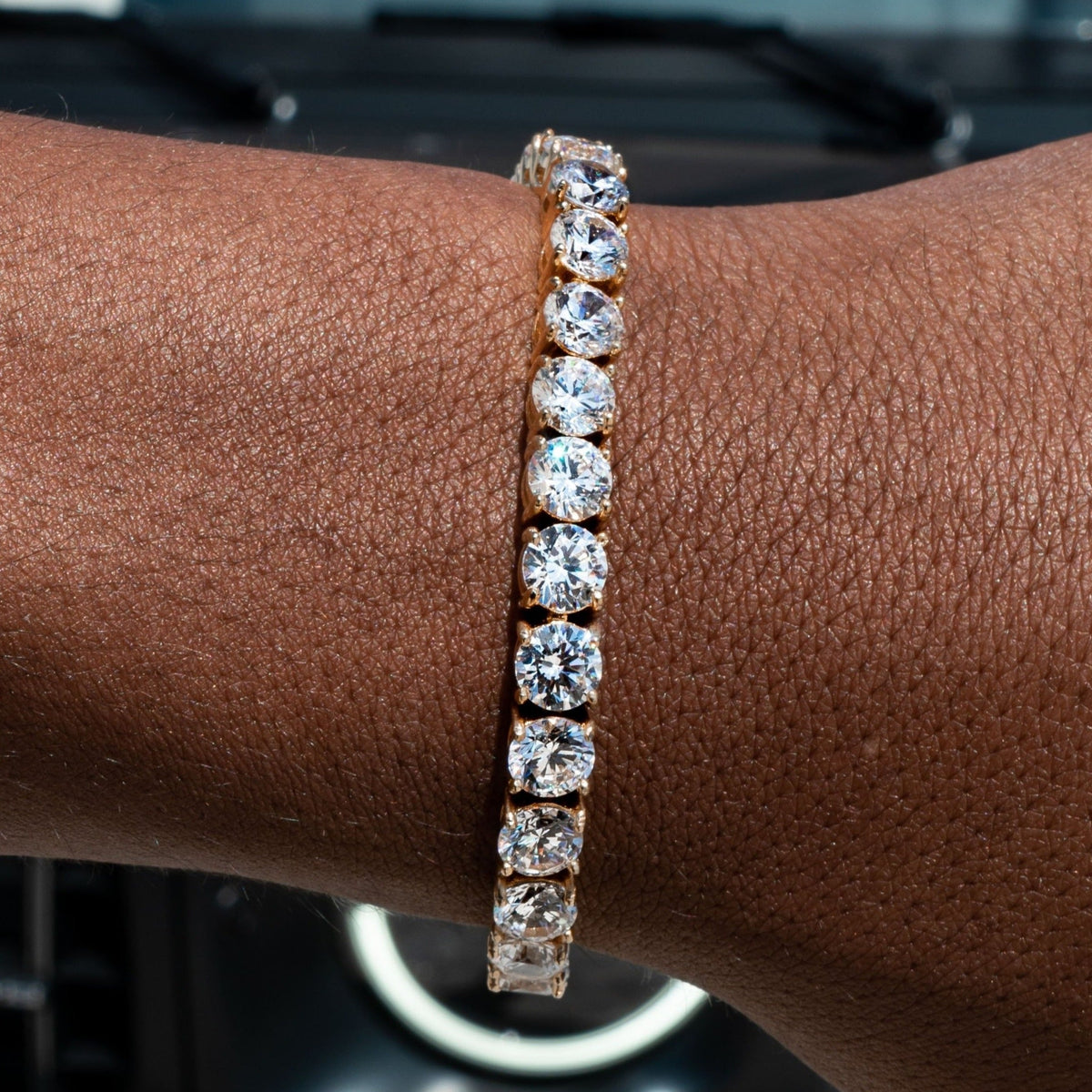
Three locks, and all three matter. The 6mm Yellow Gold tennis bracelet closes with one click and two side clasps, and the bracelet is only as secure as the last of those three you remember to close. Here is how the lock works, how to check it in a few seconds and how to keep it working.

Why tennis bracelets need a serious clasp
The tennis bracelet's name is tied to a closure that let go. By Chris Evert's own account, her bracelet broke during a match at the 1978 US Open. The lesson still applies. A single row of settings bends and twists with every movement of the wrist, so its closure takes more strain than the catch on a stiff bangle. SKRT's answer is a triple lock instead of a single catch.
The three parts, end by end

Look at the two ends laid open. One end is a small box with a pin on each side. The other is a flat tongue with two hinged side clasps standing up beside it. The tongue slides into the box and clicks, which is lock number one. Then each side clasp folds down over its pin, one on the left and one on the right, which are locks two and three. The click holds the bracelet together. The side clasps make sure it stays that way if the tongue is ever pressed by accident.
The few-second check
The click alone feels finished, which is exactly the trap. In the photo below, the tongue is in the box but both side clasps are still open. Make a habit of the same three steps every time: click, fold the left clasp, fold the right clasp. Then run a fingertip across the box to feel that both clasps lie flat, and give the bracelet a gentle pull. If anything flips up, start again. Doing it the same way every morning is what makes it automatic.

Taking it off without forcing it
Reverse the order. Lift both side clasps first, then press the tongue to release it from the box. Pulling on the bracelet while a side clasp is still down can bend the clasp instead of opening it. Do it over a table or a bed rather than a sink, so a slip does not send the bracelet down a drain.
A fit that is kind to the lock
A bracelet that is too tight pulls on the clasp every time you flex your wrist. The bracelet comes in 6, 6.5, 7, 8 and 9 inches. Measure just below the wrist bone and add 0.75 to 1 inch for the relaxed fit that tennis bracelets prefer. A 6mm row feels tighter than a slim one at the same number, so if you fall between two sizes, take the larger. If your size is not available in 6mm, the Diamond Tennis Bracelet in Yellow Gold - 5mm uses the same triple lock one millimeter narrower. The SKRT Size Guide shows the measuring method.
Keeping the click crisp
Hand cream and soap film end up inside the box, and grit there is what makes a click feel soft. Let lotion dry before you fasten the bracelet, and wipe it with a microfiber cloth when it comes off. Once a month, soak it 2 to 3 minutes in lukewarm water with a drop of mild dish soap, brush gently around the box and the side clasps with a soft toothbrush, rinse, and pat it dry at once. Keep it out of pools, hot tubs and saltwater. If a side clasp ever refuses to stay down, keep the bracelet in its pouch instead of trusting it on your wrist. It has heavy 18K gold plating over a 316L stainless steel core, is hypoallergenic for most skin and is backed by SKRT's Lifetime Guarantee.
Quick answers
How do I open a tennis bracelet clasp?
Lift both side clasps first, then press the tongue to release it from the box. Never pull the bracelet apart with a clasp still closed.
Can a tennis bracelet fall off?
With all three parts closed, it is made to stay on through normal movement. The usual mistake is clicking the tongue in and forgetting the side clasps.
Does lotion affect the clasp?
Residue can build up inside the box over time. Let lotion dry before fastening, and clean around the clasp during the monthly soak.
One row, locked three ways. See the Diamond Tennis Bracelet in Yellow Gold - 6mm, or browse Tennis Bracelets for Him.

Share:
Giving the 6mm White Gold Tennis Bracelet to Him: Size, Clasp and Care
12mm White Gold Cuban Link Chain: An Iced Cuban, Up Close