

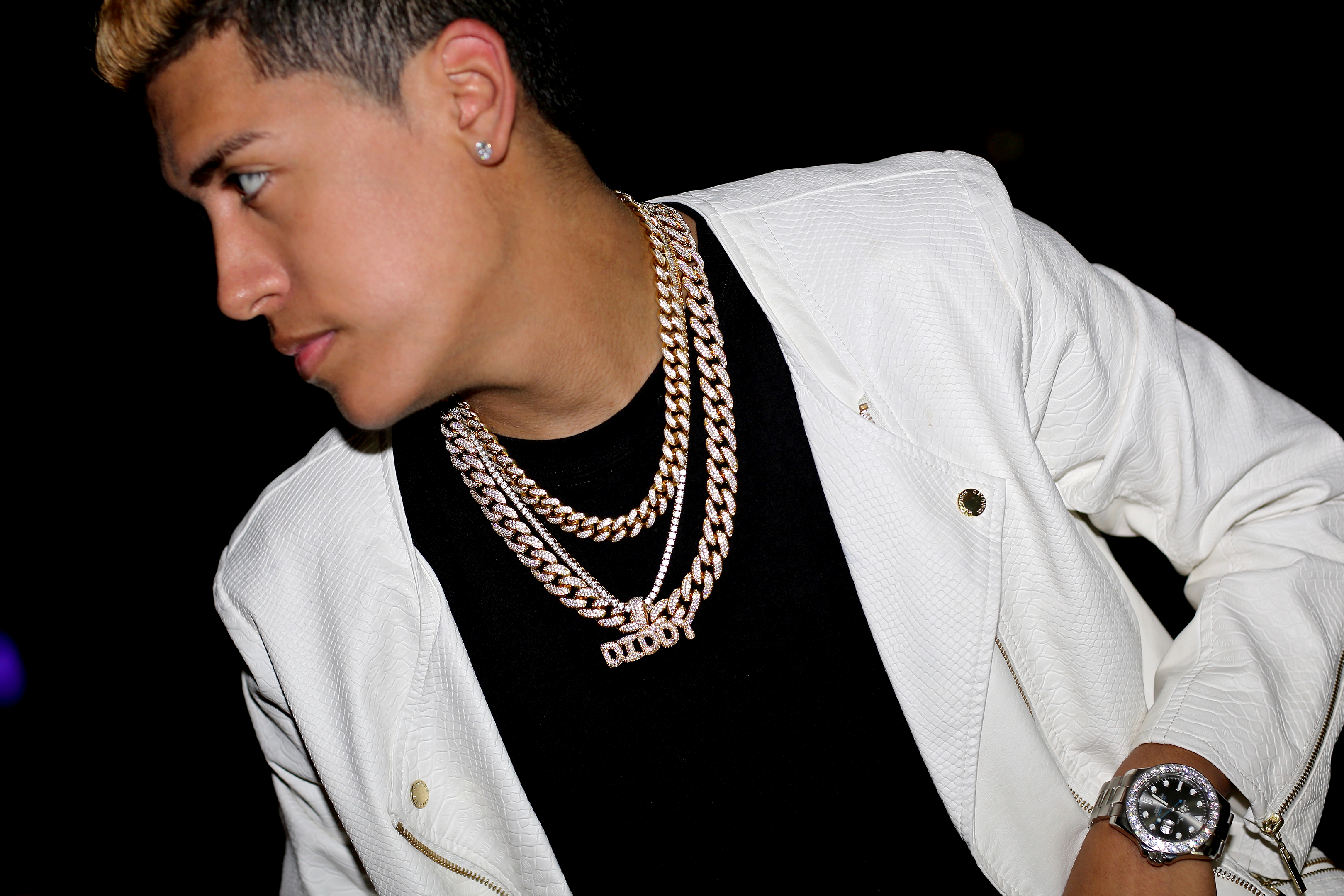
The word "bling" is in the dictionary. Most people who use it casually don't know it came from a single Cash Money Records song in 1999. Here is the full story of how the phrase, the era, and the aesthetic emerged.
The song
In 1999, B.G. released "Bling Bling" off his album "Chopper City in the Ghetto", produced by Mannie Fresh. The hook featured fellow Cash Money artists Lil Wayne, Juvenile, and Big Tymers. The track was an anthem to flashy diamond jewelry.
The phrase "bling bling" was meant to be the onomatopoeia of light catching off diamonds. The mental "bling bling" sound your ears make when a chain catches the sun.
The song was a regional Southern hit immediately. Within a year it crossed into mainstream pop culture. Within five years "bling" was in news articles, magazine headlines, and eventually the Oxford English Dictionary.
Why Cash Money
Cash Money Records was founded in 1991 in New Orleans by Bryan "Birdman" Williams and his brother Ronald "Slim" Williams. By 1998 the label had a deal with Universal worth a reported 30 million dollars.
The Cash Money roster (Lil Wayne, Juvenile, B.G., Turk, Mannie Fresh) defined Southern hip-hop in the late 1990s. Their visual identity was central to their sound: oversized chains, iced-out pendants, big rings, custom grills.
The bling aesthetic preceded the song "Bling Bling". The song just put a name on what was already happening. From 1999 onward, the entire industry called it that.
The 2000s bling era
The early-to-mid 2000s were peak bling era. Three things characterized the period:
- Maximalism. More stones, bigger pendants, heavier chains, custom pieces with no restraint.
- Custom pieces over off-the-shelf. Rappers commissioned one-of-one pendants with personal symbolism (last names, label logos, statement designs).
- Public display. Music videos, magazine covers, awards shows. Bling was meant to be seen.
The era's most-photographed jeweler was Jacob the Jeweler (Jacob Arabo) in New York. He worked for Cash Money, Roc-A-Fella, and dozens of artists who paid for custom pieces that ran from 50,000 to 500,000 dollars each.
The pendant defined the artist
In bling era hip-hop, the pendant became the artist's calling card. Examples:
- Cash Money Records: the dollar-sign and "C" pendant
- Roc-A-Fella: the diamond Roc-A-Fella logo
- Pharrell: his Jacob-made giant N.E.R.D pendant
- Jay-Z: the Roc dynasty piece, the diamond medallion
Wearing your label's pendant publicly was an identity statement. It said which side you were on, which family you belonged to, which work you stood behind.
Why bling matters now
The bling era ended in cultural sense around 2010, when minimalism started taking over fashion broadly. But the aesthetic never disappeared from hip-hop. It just got reabsorbed into the broader mainstream.
The reasons:
- Lab diamonds and high-grade CZ made the bling look reachable at non-celebrity prices. The 2000s bling cuban that cost a rapper 30,000 dollars now costs an anyone 800 dollars.
- Streetwear culture made statement accessories acceptable across demographics. What read as flashy in 2003 reads as well-dressed in 2026.
- Hip-hop became the dominant cultural force in mainstream pop. The visual identity of hip-hop became the visual identity of mainstream youth culture.
So while the era ended, the look it created is still ascendant. The cuban links, tennis chains, iced-out pendants you see daily are direct descendants of what Cash Money put on TRL in 1999.
What we owe Cash Money
A specific list of jewelry conventions that come directly from the bling era:
- Multi-chain layering. Cash Money artists wore stacks before stacks were normal.
- Custom pendants with personal symbolism. A defining bling-era move.
- Iced-out grills. Started in early-2000s Houston/New Orleans, exported globally.
- The yellow-gold-and-iced aesthetic specifically. Pre-1999 hip-hop was more silver-and-gold mixed. Bling era cemented yellow gold plus iced as the signature.
- The phrase "ice" itself for diamond-set jewelry, popularized in the same era.
Pro tip: if you want to study bling-era jewelry as a buyer, the Cash Money official photo archives, the Hot Boys music videos from 1999-2001, and any No Limit Records footage from the same era are the visual canon. Watch them.
Bottom line
Bling didn't start with that song. But the song gave it a name, a moment, and a way for the whole world to recognize the aesthetic that hip-hop had been building since the 1980s. Twenty-six years later, every chain SKRT and every other modern jeweler sells is in the lineage Cash Money helped name.
Browse SKRT iced-out for pieces in that lineage.
SKRT picks fitting this guide: the Iced Out Baguette Cross in 18K White Gold and the Iced Out Baguette Hamsa Hand in 18K Rose Gold.


Share:
How to Travel With Jewelry Without Damaging It
How Often Should You Re-Plate a Gold Chain?